

Marilyn Monroe’s final, unfinished screen performance…
Starring: Marilyn Monroe, Dean Martin, Cyd Charisse, Tom Tryon, Wally Cox, Phil Silvers, Steve Allen
There are a number of Hollywood actors whose legacy has allowed them to remain in popular culture for years after their career peak. Actors such as Orson Welles and Audrey Hepburn are still as recognisable today as they were during Hollywood’s Golden Age. Whether you remember Orson Welles for his iconic role in Citizen Kane or Audrey Hepburn’s performance as Holly Golightly in 1961’s Breakfast At Tiffany’s, these two have managed to remain in popular culture over 50 years later. Another way to remain in the public consciousness for decades to come, this reviewer has found, is to die at a young age. See James Dean (died aged 24), River Phoenix (23) Heath Ledger (28), Bruce Lee (32) for example.
For many of these actors who perished at a young age, they unfortunately died while filming or having recently completed their latest project. Due to the performer’s untimely death, greater weight was often given to that performer’s most recent work. Bruce Lee’s Enter The Dragon was hugely successful upon its original release in 1973, grossing $90 million against a $850,000 budget and is a brilliant film on its own terms. However, the film has gained extra prominence in the passing years considering that Enter The Dragon was Bruce Lee’s final completed role before his death. James Dean’s performances in Rebel Without A Cause and Giant are now iconic considering that both films were released after his 1955 death, with the latter film even receiving a posthumous Oscar nomination. Even though Heath Ledger delivered an iconic, outstanding performance as The Joker in The Dark Knight, there is the opinion out there that his posthumous Oscar win may have been aided by his untimely death six months before the film’s release.
Besides these notable examples, it is difficult to argue that the actor or actress who has managed to burn brighter than everybody else in popular culture over the last 50+ years is Marilyn Monroe. Marilyn is one of those Hollywood stars who is immediately recognisable even if you haven’t seen a single one of her films. Along with her roles in Some Like It Hot (1959), Gentlemen Prefer Blondes (1953) or The Seven Year Itch (1955) (featuring that subway scene with that white dress), the numerous pieces of art have been produced in the years and decades following her death, including the work done by Andy Warhol in the 1960’s and the original version of Elton John’s Candle in the Wind (1973). Since her death in 1962, 14 films, 3 plays and 1 opera have been produced about the life of Marilyn Monroe, with Catherine Hicks, Ashley Judd, Mira Sorvino and an Oscar-nominated Michelle Williams portraying her on-screen. In addition with Marilyn being seen as the ultimate ‘sex symbol’, several current stars including Beyoncé, Rihanna, Scarlett Johansson, Drew Barrymore, Nicole Kidman and Jessica Simpson have posed on magazine covers as Monroe.

Misty Rowe, Goodbye Norma Jean (1976) 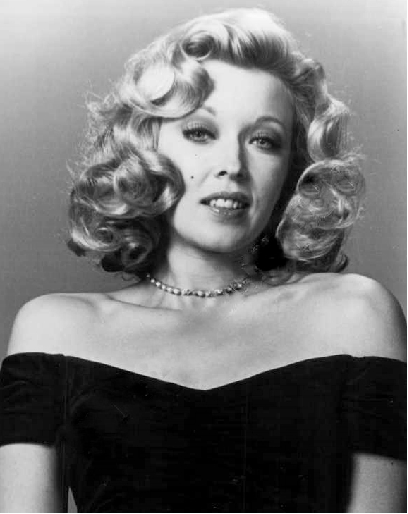
Constance Forslund, This Year’s Blonde (1980) 
Catherine Hicks, Marilyn: The Untold Story (1980) 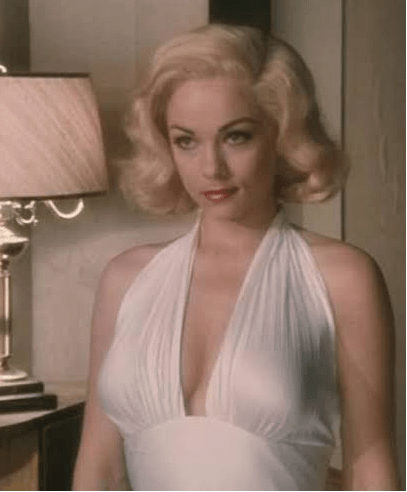
Theresa Russell, Insignificance (1985) 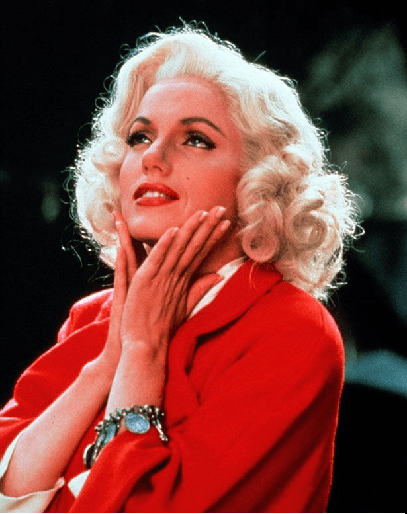
Susan Griffiths, Marilyn & Me (1991) 
Stephanie Anderson, Calendar Girl (1993) 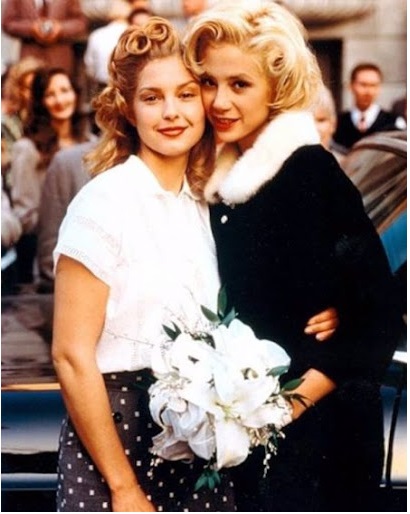
Ashley Judd & Mira Sorvino, Norma Jean and Marilyn (1996) 
Poppy Montgomery, Blonde (2001) 
Charlotte Sullivan, The Kennedys (2011 TV series) 
Michelle Williams, My Week With Marilyn (2011) 
Kelli Garner, The Secret Life of Marilyn Monroe (2015)
However, despite all of this posthumous iconography, Monroe differs from the examples mentioned earlier. While James Dean, Heath Ledger, and Bruce Lee’s final roles were given more attention as a result of their untimely deaths, Marilyn’s final roles have since fallen under the radar. At the time of her death, Marilyn Monroe wasn’t exactly in the prime of her career. Instead, she was in a career decline.
After the huge success of Some Like It Hot in 1959, Marilyn sought to take time off from acting. She later accepted the lead role in 1960’s Let’s Make Love in order to fulfil an existing contract with 20th Century Fox. The film, which was heavily re-written by Monroe’s husband and playwright Arthur Miller, was a box office success earning $6.54 million against a $3.58 million, but was seen as a failure by Hollywood insiders due to Monroe’s previous box office bankability. Furthermore, the film was provided with unneeded publicity due to gossip magazines speculating on a potential affair between Marilyn and her co-star Yves Montand.
Her next film, 1961’s The Misfits, was another production racked with problems, with director John Huston allegedly being frequently intoxicated while filming. At the same time, Monroe’s marriage to Arthur Miller had completely broken down and her usage of prescription drugs had spiralled out of control. On one occasion, the film’s production had to be shut down while Monroe attended a detox clinic. The film was a box office failure grossing only $4.1 million in the USA from a $4 million budget, but has seen been re-evaluated as a classic. Following an operation to remove her gall bladder, a relationship with Frank Sinatra and a period in hospital dealing with depression, Marilyn was ready and preparing to make her next film Something’s Got To Give, the topic of today’s ‘Forgotten Curiosity’.
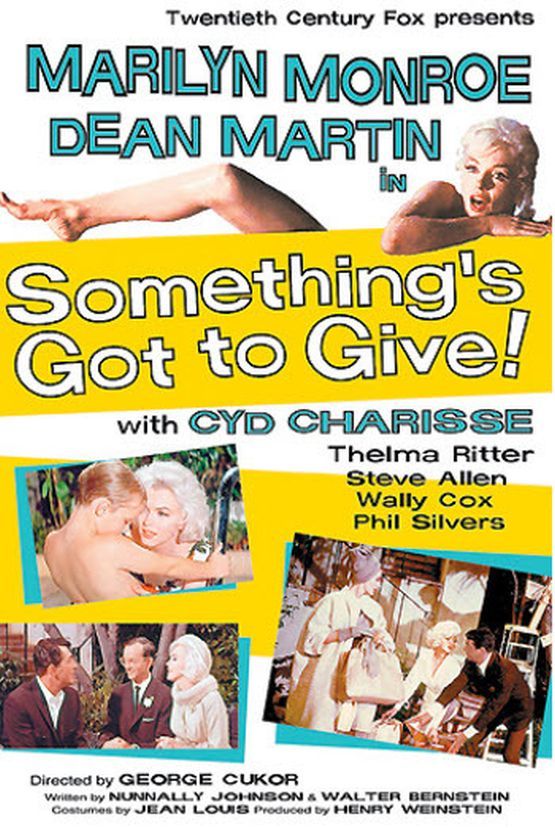
Something’s Got To Give is a screwball comedy film that started shooting in the spring of 1962. The film was being directed by George Cukor, known for his work on 1940’s The Philadelphia Story with Katherine Hepburn, Cary Grant and James Stewart, 1949’s Adam’s Rib with Hepburn and Spencer Tracy and the 1954 version of A Star Is Born with Judy Garland. He had also previously worked with Marilyn on Let’s Make Love. In addition to Marilyn Monroe, the film starred Dean Martin and Cyd Charisse in the two other leading roles.
The film was set to be an updated remake of the 1940 film My Favourite Wife, which had starred Cary Grant and Irene Dunne in the lead roles. The plot to Something’s Got To Give shares the plot of the original film having been adapted from the 1864 Alfred Tennyson poem ‘Enoch Arden’. Having been missing for five years after the ship she was on went missing in the Pacific Ocean, Ellen Arden (Monroe) has been declared legally dead by her husband Nick (Martin) who has since gotten remarried and is now honeymooning with his new wife Bianca (Charisse). However Ellen, who is very much alive, soon returns home. Her children do not recognise her but invite her to stay nonetheless. Upon returning home and finding his wife alive and well, Nick finds that he is now married to two women simultaneously. Ellen pretends to be a woman named Ingrid Tic while her husband attempts to keep the truth about his former wife secret from his new belle.

Like the two films that preceded it, the production cycle of Something’s Got To Give was fraught with problems, most involving its lead actress. The process started off well enough, with Marilyn showing up on time for makeup, costume and screen tests. According to insiders on the set, she was in good spirits, motivated and ready to work. However on 23rd April 1962, the film’s first day of production, Marilyn rang director George Cukor to say that she was ill due to a sinus infection and wouldn’t be on set that day. The studio’s doctor was sent to examine Marilyn. From his diagnosis, he recommended that filming be delayed by a month to allow Marilyn time to recover. Not willing to waste time, Cukor spent the available time filming scenes with Martin and Charisse that didn’t involve his other lead actress, giving her time to recover. Unfortunately, Marilyn would continue to suffer from various illnesses including fevers, eventual sinusitis and even bronchitis, pushing the film’s production back by an eventual 10 days, which Cukor had been trying to avoid.
Production started on 23rd April, but Monroe wouldn’t show up until one week later, on 30th April. Two days later, she collapsed on set due to a fever. Monroe’s increased absences only led to annoyance rather than sympathy from the film’s production crew. By 8th May, she had missed 11 days of filming, and Cukor was forced to shut down the production, claiming to have ‘run out of scenes to shoot’ that didn’t involve Monroe. A production report from two days later also stated that all remaining scenes required her presence on set. At this point, Monroe had worked for justtwo days, and the production was running five days behind its original schedule.
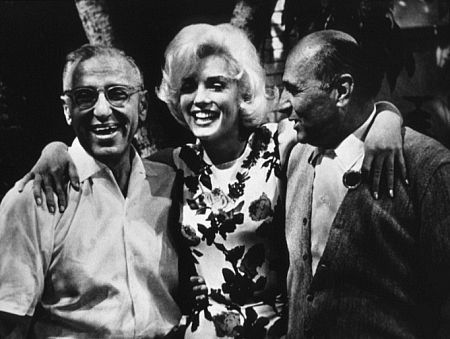
However, Marilyn’s appearances on set continued to be few and far between. After turning up on 14th May and two days afterwards passed without incident, the crew learnt on 17th May that Marilyn had been personally asked to perform at Prseident John F Kennedy’s birthday celebrations two days later. Marilyn had originally been given permission by Fox to perform at the concert. However, once production fell behind on Something’s Got To Give, studio heads tried to urge her not to go and her eventual appearance only angered the Fox executives further. Another major problem the film faced involved the production going over its original budget. In 1962, 20th Century Fox was in serious financial trouble. Most of these problems were caused by the infamous production of Cleopatra, starring Elizabeth Taylor and Richard Burton in the lead roles. To pay for this film’s budgeting problems, Fox sold its entire studio back lot in 1961. Cleopatra would eventually become the most expensive film ever made, costing $40 million to produce ($337 million in 2020). To further account for Cleopatra’s exorbitant budget, Something’s Got To Give was originally scheduled to be released in cinemas in October 1962. However, with its star’s unreliable nature, the film was now a number of days behind schedule and several hundred thousand dollars over budget. The familiar presence of Marilyn’s method acting coach Paula Strasberg and publicist Pat Newcombe on set did little to help matters.
After her performance at President Kennedy’s wedding, Marilyn tried to get herself back in the crew’s good books by promising a cinematic first. Something’s Got To Give would be the first mainstream Hollywood release to feature a Hollywood actress going topless. This would also the first swimming pool scene featuring an actress going topless, preceding Fast Times at Ridgemont High by 20 years. Due to later events, this cinema first would actually be achieved a year later by Jayne Mansfield in Promises! Promises!. The scene was filmed and photographed when Marilyn appeared on the June 1962 cover of Life magazine wearing nothing but a terrycloth below the title ‘The skinnydip you’ll never see’. At this point, it seemed that Marilyn had returned and production had finally gotten back on track, that is until June happened.

By 25th May, Marilyn had been on set for one full week. On 1st June, Monroe’s 36th birthday, a party had been planned on-set complete with a cake. However, Cukor demanded that the celebrations wait until filming was completed for the day, wanting to get a full day’s work out of Marilyn to make up for the 11 days the film had fallen behind schedule. 1st June would be Monroe’s last day on set, on any film set in fact. Ater filming wrapped that day, Monroe had thrown out the first ball at a muscular dystrophy benefit in San Francisco, which seemingly had led to a flare up in her sinusitis. After missing the next two days of filming, Marilyn Monroe called in sick for the 17th time on 4th June 1962. At this point, every scene not involving Monroe had been filmed. The normally measured Dean Martin even walked off the set in anger, showing his annoyance at his co-star’s all-too frequent absences. The production was now 15 days behind schedule and $1 million over budget ($8.5 million in 2020). Fearing further production delays and a situation similar to Cleopatra, the decision was made to fire Marilyn Monroe from Something’s Got To Give on 8th June 1962, putting production on hold once again. In addition, Monroe was fined $750,000 in damages for the delays in production.
After shopping the role around to other actresses, an agreement was made to replace Monroe with Lee Remick. Remick was a rising star in Hollywood who had appeared in a string of successful films including Otto Preminger’s Anatomy of a Murder (1959), Elia Kazan’s Wild River (1960) and Blake Edwards’ An Experiment In Terror (1962) in recent years, earning much critical acclaim along the way. However, the decision to replace Marilyn was rejected by many of the cast, including Dean Martin, who had originally agreed to do the film in order to work with her. After the plans to replace her eventually fell through, Fox returned to Marilyn and offered to re-hire her along with a huge pay rise and a pre-agreement to work together on the film that would eventually be known as What A Way To Go!. Both films would net Marilyn $1 million ($500,000 per film), the equivalent of a major Hollywood star in 2020 being paid $8 million for their next two films, plus bonuses. Monroe agreed to return to the film on the condition that director George Cukor would be replaced by Jean Negulesco, who had previously directed her in 1953’s hugely successful How To Marry A Millionaire. The studio agreed to her demands. Therefore after five months of further delays, production would resume on Something’s Got To Give with a new director and the return of its leading lady in October 1962, the month it was originally intended to be released. However this would never come to pass as Marilyn Monroe would die suddenly on 5th August 1962 at the age of 36 after overdosing on barbiturates. At the time of her death, Marilyn was talks to star in a biopic of Jean Harlow, another blonde screen icon and sex symbol, who notably died young at the age of 26 in 1937.
After Marilyn Monroe’s death, no further work was completed on Something’s Got To Give and the film was never finished. However, a remake of My Favourite Wife (the original purpose behind Something’s Got To Give) would be released the following year in 1963. The scripts were rewritten and the existing sets and costumes from the Monroe project were re-used, albeit with an entirely new cast and crew. The new film was titled Move Over, Darling, now directed by Michael Gordon and starring Doris Day as Ellen, James Garner as Nick and Polly Bergen as Bianca. The film was released on Christmas Day 1963 and was a commercial success, earning $12 million against a $3.35 million budget ( the equivalent of a $106million gross against a $28 million budget in 2020 dollars).

What happened to the cast and crew of Something’s Got To Give? Two years later, George Cukor would direct the film adaptation of My Fair Lady, starring Audrey Hepburn and Rex Harrison, which would become the highest-grossing film of 1964 and win eight Oscars including Best Picture, Best Actor and Best Director for Cukor. Dean Martin would star in three films in 1963, Toys in the Attic with Geraldine Page, the western comedy 4 For Texas with Rat Pack compatriot Frank Sinatra and Who’s Sleeping In My Bed? with Carol Burnett. He would also appear as part of the large cast of actors supporting Shirley MacLaine in the eventual version of What A Way To Go! , released in 1964. Cyd Charisse wouldn’t star in another film until 1965’s Assassination In Rome after which she would appear in supporting roles for the rest of her career.
The original footage shot for Something’s Got To Give remained hidden for the next two decades within the vaults of 20th Century Fox. In 1989, nine hours of unedited footage was uncovered and included as part of a documentary by 20th Century Fox called Marilyn: Something’s Got To Give. In 1999, the footage would be edited and assembled using original scripts and production notes into a package in 2001’s Marilyn Monroe: The Final Years. The combined material is 37 minutes long.

As the film was never finished, it will remain unknown how successful this film could have been and how the critics would have received it. However after the viewing the 37 minute ‘short film’, this reviewer can say that the film could have worked. The scenes are well acted by all involved. Monroe is wonderful in her role as Ellen and could have added another impressive performance into her growing back catalogue of acclaimed performances. Dean Martin is great as the man stuck in the middle of this light screwball comedy, having to deal with two wives living in his house while trying to keep one secret from the other. Cukor’s selection of shots and overall direction shows you why he was one of Hollywood’s best in the early 1960’s, capturing not just the performances of Martin, Monroe and Charisse but also more subtle expressions. In one scene, Monroe’s Ellen returns home to see her children for the first time in five years. In one long close-up, Ellen watches her children play around in the house’s swimming pool and her facial expressions tell you more than words ever needed to. When Ellen reveals herself to Nick and Bianca, posing as the children’s Polish nanny, the camera focuses solely on Martin as surprise fills his face at the sudden reappearance of his former wife. The 37 minutes is also well written, offering a number of laughs coming mainly from the interactions between the main leads and supporting characters including Steve Allen, Phil Silvers and Wally Cox’s ‘Adam’, a shoeshop worker who Ellen uses to pose as a man who she supposedly had an affair with during the five years she was lost on a desert island. After viewing the abridged version I have seen, I can honestly say that I would have been intrigued to see the completed product and would likely have enjoyed it.
Marilyn Monroe’s untimely passing in 1962 was and will always remain a tragedy. As a film lover, it is equally tragic considering that at the time of her death, she was starting to be seen as more than just the blonde bombshell from Gentlemen Prefer Blondes (1953). From her roles in The Seven Year Itch (1956) onwards in the final six years of her career, Marilyn Monroe was nominated for two BAFTAs and two Golden Globes, winning for Best Actress in a Musical or Comedy for her role in the enduring popular Some Like It Hot (1959), seen today as one of the greatest comedy films of all time.. It will never be known how successful Something’s Got To Give would have been and what it would have done for Marilyn Monroe’s career but from what this critic has seen, they were on to something good.
 forgotten-media.com