
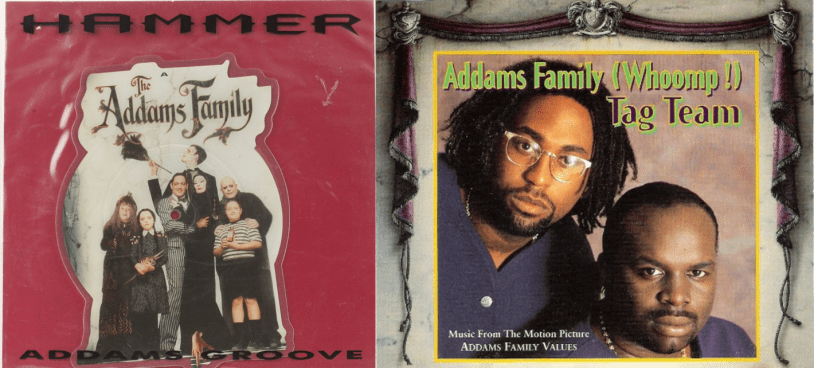
A pair of all together ooky ‘original’ songs used to market and supplement a pair of 90’s movie classics…
Back in the 1990s, it was common to see movie soundtrack albums selling as well or even better than regular music LPs. During this time, it was particularly common to see a leading film studio market one of their blockbuster releases by asking a rap or hip-hop artist to record the lead single for the accompanying soundtrack album. Both famous and unknown, rap artists were being called upon to lend their musical talents to promote big-budget Hollywood movies, a practice that would prove successful throughout the decade. The success would represent itself in two different ways. The rap song would serve its purpose of marketing the upcoming release, and inversely, the movie, once released, would help to sell the music.
The practice of using rap and hip-hop artists to market popular movies would cross multiple genres, from animation to science fiction to horror to superheroes, and even political satire. (I’m looking at you, Bulworth.) When thinking of these songs, the mind immediately goes to Will Smith’s ‘Men In Black’ from 1997 and ‘Wild Wild West’ from 1999, tracks that promoted the upcoming films of the same name that would feature Smith in the headline role. The sales figures for these two tracks (2.79 million and 1.54 million copies sold respectively) proved that ‘The Fresh Prince’ had the power to create a song that would not only send listeners to their local music shops but later their nearest cinema or movie theatre.
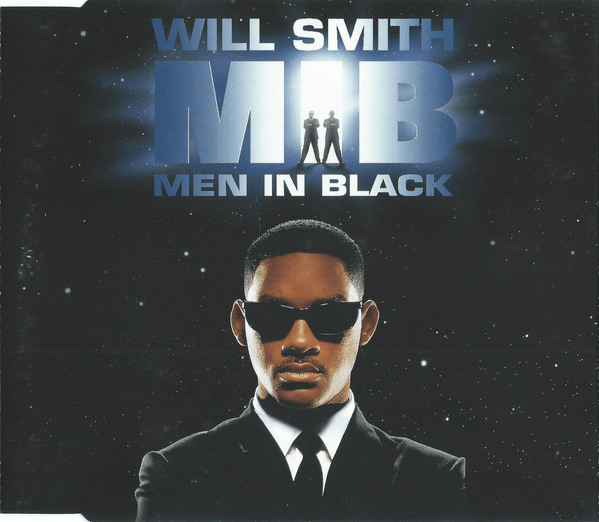
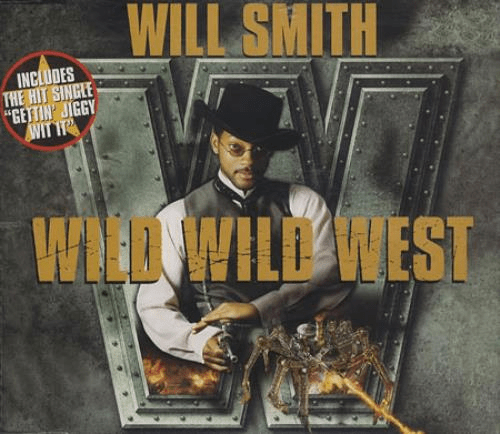
However, Mr Smith was not the only big-name rapper to record music for a blockbuster film. For the Space Jam soundtrack, rappers B-Real, Coolio, Busta Rhymes, Method Man and LL Cool J would combine on ‘Hit ‘Em High (The Monstars’ Anthem)’, a song used as the theme song for the opponents of Michael Jordan’s ‘Tune Squad’ in the movie. LL Cool J would later provide two songs to the soundtrack of 1999’s Deep Blue Sea, most memorably of all the song ‘Deepest Bluest (Shark’s Fin)’. Following the Fugees’ split, rapper Pras would announce himself as a solo act with the song ‘Ghetto Supastar (That is What You Are)’, a track which would feature heavily in the marketing for the 1998 Warren Beatty-directed, produced, written and starring political black comedy Bulworth. ‘Ghetto Supastar’ would include a guest rap from ODB (Ol’ Dirty Bastard) and utilise the vocals of R&B singer Mýa. The song would hit No.1 in seven countries, reach the top 10 in eighteen, and chart inside the top 20 in twenty countries while selling more than 1.61 million copies. In fact, ‘Ghetto Supastar’ would be the first of two hit songs in 1998 featuring Mýa to come from a movie. In November of the same year, Mýa would collaborate with R&B group Blackstreet and rappers Mase and Blinky Blink for the song ‘Take Me There’, the lead single for the platinum-selling soundtrack for The Rugrats Movie.

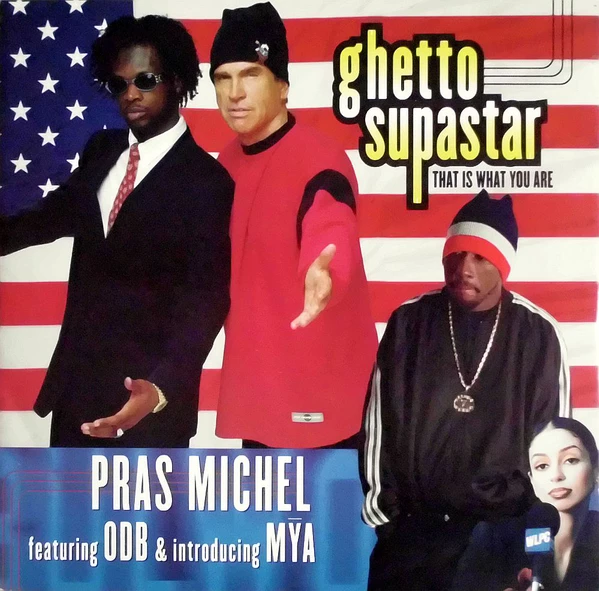
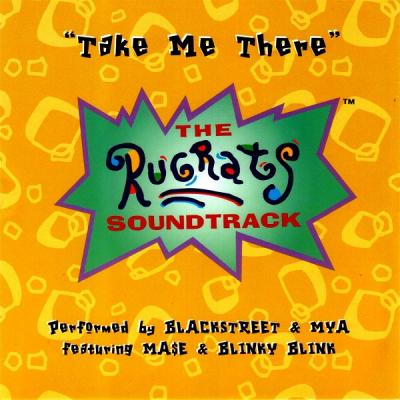
Suppose two rappers from Puff Daddy’s Bad Boy records and two R&B acts can be used as an effective marketing tool for advertising the big-screen adaptation of a Nickelodeon animated TV show about the lives and imaginations of a group of toddlers. In that case, it is obvious why film studios were keen to use rap, R&B and hip-hop acts to promote their major film releases throughout the 1990s. However, now it is time to talk about the main subject of this article.
The Addams Family
In 1991, noted cinematographer Barry Sonnenfeld, who had worked with the Coen Brothers on Blood Simple (1984), Raising Arizona (1987) and Miller’s Crossing, and with Rob Reiner on When Harry Met Sally (1989) and Misery (1990) would make his directorial debut with a big-screen adaptation of The Addams Family. Originally introduced as part of a series of New Yorker cartoons back in the 1930s written and drawn by Charles Addams, the Addams Family were first adapted into a 1960s TV sitcom starring John Astin, Carolyn Jones and Jackie Coogan. This show would last 64 episodes but has continued to be shown in worldwide syndication to this day. The year 1973 would see the family appear in their own Hanna-Barbera animated series, lasting 16 episodes before the sitcom’s cast would return for a 1977 TV special called Halloween With The Addams Family. By 1991, this TV special was the most recent appearance of the family in visual media. However, on 22nd November 1991, Barry Sonnenfeld would give The Addams Family their big-screen debut. The film would see Tony and Golden-Globe nominee Raul Julia (Kiss of the Spider Woman) as Gomez, Academy Award winner Anjelica Huston (Prizzi’s Honor) as Morticia and Christopher Lloyd (Back To The Future, Who Framed Roger Rabbit?) as Uncle Fester.

To promote this new Addams Family movie, set to be Paramount Pictures’ big family joint of the year, the film’s producers would get one of the more notable artists of the day to record an original song to promote the upcoming picture. Having witnessed the success that Partners in Kryme had achieved with ‘Turtle Power!’ (used to promote Teenage Mutant Ninja Turtles the previous year), the music department on The Addams Family decided that another family-friendly rap song was the way to go. However, for the performer, these producers would not go to an unknown act like Partners in Kryme; they would go to the biggest rap star in the world. Enter MC Hammer.
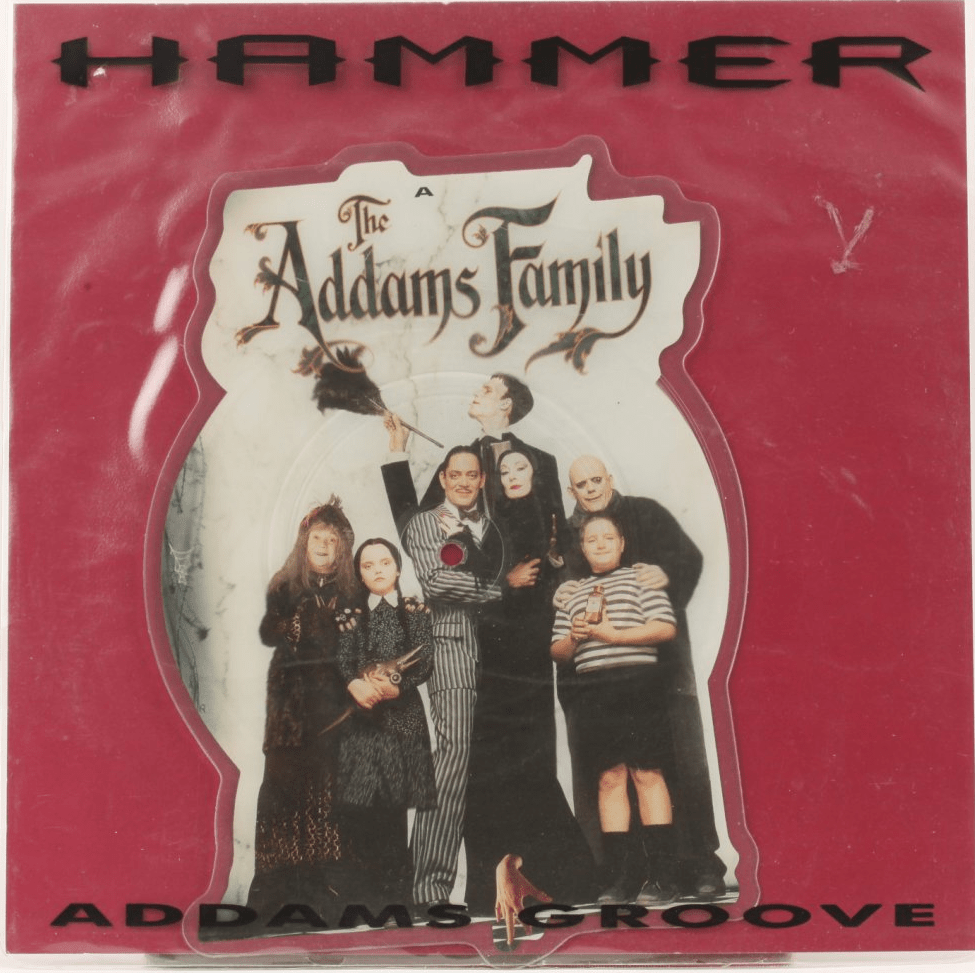
Addams Groove
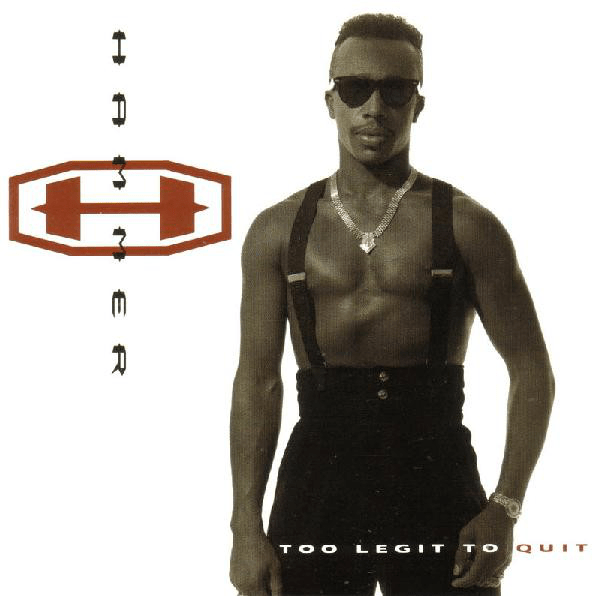
When the people behind The Addams Family came calling for his services, MC Hammer had just come off the diamond-selling album Please Hammer Don’t Hurt ‘Em. The album had remained atop the Billboard Hot 200 album charts for 21 consecutive weeks and had produced three top-ten hits in ‘U Can’t Touch This’, ‘Have You Seen Her?’ and ‘Pray’. By the time The Addams Family was set for release, Hammer had a new album and a new hit single out, entitled ‘2 Legit 2 Quit’. He even had his own Saturday morning cartoon series airing on ABC called Hammerman, in which he played his animated counterpart. However, Hammer would agree to write and produce an original song to promote the release of The Addams Family. The song would be titled ‘Addams Groove’. Hammer had written the song himself, along with regular collaborator Felton Pilate and Vic Mizzy, the man who had composed and performed the iconic theme song for The Addams Family TV series back in the 1960s. A lot of effort was even put into the song’s video, which would see MC Hammer visit the film’s sets and interact with the film’s cast. Then, as a special treat for cinemagoers, Paramount Pictures would announce that every screening of The Addams Family would be preceded by the music video for ‘Addams Groove’. This was certainly Paramount’s way to get people excited for the yet-unforeseen movie and promote MC Hammer’s latest single, both set for release in November 1991.

Upon its release on 22nd November 1991, The Addams Family would become one of Paramount Pictures’ biggest films of 1991. The film would top the United States box office in its opening weekend, grossing $24.2 million, and would remain at the summit over the Thanksgiving weekend. The film would eventually bring in $113 million at the domestic box office. Adding in a further $78 million from international markets, The Addams Family would end up grossing $191 million worldwide. This total would make the film the eighth-highest grossing film of 1991, ahead of such movies like Hot Shots!, Father of the Bride and Teenage Mutant Ninja Turtles.

While the film may have succeeded commercially, critics were not taken with The Addams Family. Roger Ebert would give the movie 2 stars out of 4, while Chicago Tribune critic Jonathan Rosenbaum would sum up the film with the line “A collection of one-liners and not much more”. The film currently holds a 67% consensus rating on Rotten Tomatoes and a score of 57 on Metacritic, indicating mixed reviews. However, the one element of The Addams Family that earned the most derision from critics was the MC Hammer song and music video that played before each of the film’s screenings. In the thirty years since its original release, critics and audiences have warmed to The Addams Family, and the film has achieved cult status. The same re-appraisal has not been afforded to MC Hammer’s ‘Addams Groove’, and, honestly, this song does not deserve one.
‘Addams Groove’ may be one of the worst movie tie-in songs this writer has ever heard. An earworm for all the wrong reasons, ‘Addams Groove’ is three minutes and fifty-eight seconds of music that feels like it lasts three times that length. Once you’ve finished listening to this seemingly interminable record, you find yourself wishing and hoping that this song never crosses your path again. However, MC Hammer and Felton Pilate have ensured that this repetitive piece of music sticks in your mind far longer than is necessary.
To find the main problem with ‘Addams Groove’, you can only look at the chorus, a chorus which you will hear far too many times for your liking. The lyrics for the chorus read as follows:
“They do what they wanna do, say what they wanna say
Live how they wanna live, play how they wanna play
Dance how they wanna dance, kick, and they slap a friend
The Addams Family”
Upon reading these lyrics, you will immediately notice that the chorus for ‘Addams Groove’ is inspired by the hook for the original Addams Family theme song. That chorus went like this:
“They’re creepy, and they’re kooky
Mysterious and spooky
They’re all together ooky
The Addams Family”
The original Addams Family theme, written by Vic Mizzy, is a classic television theme, a song known by people across the generation gap. ‘Addams Groove’ is not an iconic work, and those under a certain age may not even know of this song’s existence. The lyrics of the Vic Mizzy song tell you everything you need to know about the Addams family. The chorus alone describes the family as ‘creepy’, ‘kooky’, ‘mysterious’, ‘spooky’, and ‘all together ooky’ (a great piece of songwriting by Mizzy). All of these lyrics immediately tell you that the Addams are not your average American family. They are a family from your nightmares, who deal in the macabre and the sometimes horrifying. After this introduction, the follow-up verses of the Vic Mizzy theme expand upon these initial descriptions. After finishing listening to the music, you feel you know who the Addams Family are, even if you have not experienced any other facet of Addams media. If the only piece of media available to you regarding the Addams Family was ‘Addams Groove, you would learn none of the things elegantly described to you by Vic Mizzy. All that ‘Addams Groove’ tells you about the Addams Family is they are a family that all share the surname ‘Addams’. Apart from that, you are on your own.
The hook of ‘Addams Groove’ is a lesson in lazy songwriting. By saying that the Addams family “do what they wanna do, say what they wanna say, live how they wanna live, play how they wanna play and
dance how they wanna dance”, all that MC Hammer says in this chorus is that the Addams ‘do stuff’. In a way, they act as a family unlike any other, but I am sure that almost every family does what they want to do, what they want to say, etc. Once again, MC Hammer tells you nothing about this Addams family, a family somehow deemed unique enough to produce a movie about. Based on the chorus above, you would wonder what made this family different from any other, what made this family in any way significant enough to become the subjects of a comic strip, a TV sitcom and a motion picture. What manages to make this chorus even worse is that you end up hearing it about eight times every minute. In total, the hook featured above is sung 12 times throughout 4 minutes of audio. This chorus accounts for half of the 23 separate stanzas of lyrics included in this song. It also doesn’t help that the chorus is sung twice in succession between each verse, and Hammer delivers it in such a staccato fashion that it feels like each performance of said hook is slowly drilling ‘Addams Groove’ into your brain with a pneumatic drill.
If you thought the chorus of ‘Addams Groove’ was terrible, the verses are not much better. From what I can gather, the verses chronicle MC Hammer’s experiences as a neighbour of the Addams family. The first verse even gives us what the chorus was missing: information about the Addams. When Hammer is relaxing in his house, he hears a voice asks if he can come out. (Now I was cold coolin’, you know (maxin’ and relaxin’)/Just kickin’ it around the house (Oaktown kicking’ it)/When a knock, a knock, a knock and a voice yo!/Can Hammer come out? (what’s up?)). However, Hammer rejects the offer because he considers the Addams ‘strange neighbours’. The next verse describes Hammer going round to the Addams house to ask for ‘A little pepper for my chicken’. However, upon his arrival, he notices something moving towards him (The next thing you know, comin’ at me/Was a hand with the fingers high steppin’). He later sees Cousin Itt around the house (But what do I see (yo) a perm with feet (Cousin Itt)/Standin’ about three feet tall), a sight which causes him to leave, presumably without the pepper he needed for his chicken.
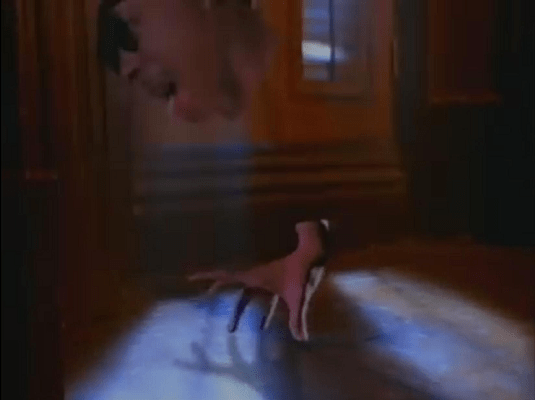
Satisfied with what you learned about the Addams family in those two verses? No? Well, that is all you get as Verse 3 details Hammer talking about his posse (Act A Fool, No Bones, Sweep, Goofy and Randy) while assuring the listener that it is okay to be yourself and cast aside your foolish pride. He uses the Addams as proof of this because, in his words, ‘they def’. That is all the information you are provided in the final verse of ‘Addams Groove’. Three verses of nothingness saying nothing about nothing come between multiple chorus renditions that tell you nothing about the Addams Family.
Finally, to top this MC Hammer hit, we get the bridge. Like the chorus, the bridge sticks in your mind due to how simple it is lyrically, how stupid the lyrics actually are and how many times said lyrics are repeated. In the end, the bridge of ‘Addams Groove’ comes down to three words, ‘Addams too legit’, repeated a total of nine times. Wondering why MC Hammer is calling the Addams ‘too legit’? This line is included to tie ‘Addams Groove’ back to the single’s parent album, 2 Legit 2 Quit. In addition, what was the MC Hammer track released immediately before ‘Addams Groove’? ‘Too Legit 2 Quit’. I know that this phrase was Hammer’s mantra back in 1991, but it is not the phrase I would use to describe the Addams Family. Although, if there is no family like the Addams family, they probably are “too legit to quit”. That point does not make this song any better.
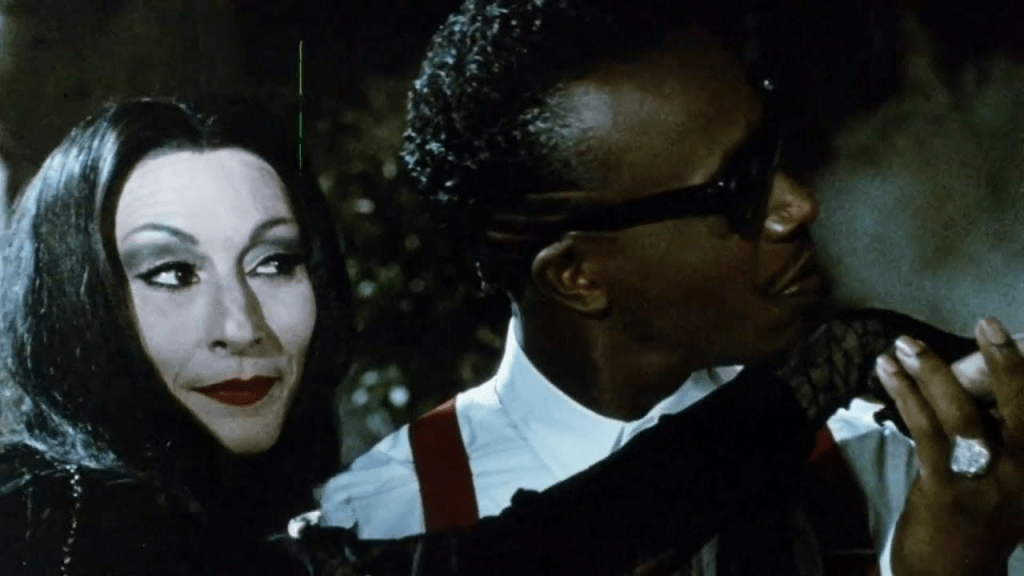
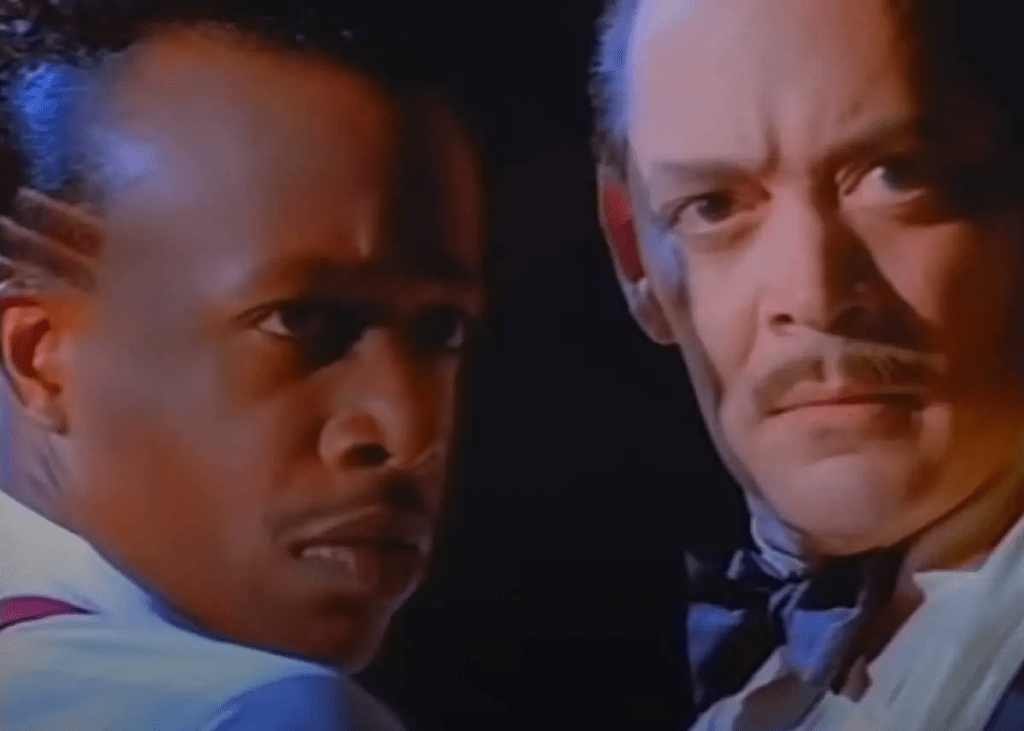
If there is one good thing to come from ‘Addams Groove’ (at a push), it is the official music video for the song. Even though watching said video means you have to listen to the accursed song, you get to see MC Hammer interacting with the Addams Family and hanging out on the movie’s sets. All the prominent cast members are there, with Raul Julia, Anjelica Huston, Christopher Lloyd, Jimmy Workman and Christina Ricci appearing. The music video doubles down on the premise of Hammer visiting the Addams house, and wacky shenanigans soon occur. Throughout the video, Hammer finds himself on a spinning wheel while Pugsley and Wednesday throw knives at him, ends up as the main dinner course, flirts with Morticia in the family graveyard and has a swordfight with Gomez. All these scenes are interspersed with clips of Hammer and his posse dancing on top of tombs, with Hammer repeatedly performing one of the worst dance moves I’ve seen in a music video. See for yourself above. The interactions between MC Hammer and the Addams family may be fun, but the video for ‘Addams Groove’ is dragged down by the original song, which causes this video to feel twice as long as its 4:05 length. In addition, seeing the cast members lip-sync and perform the hand gesture for ‘Too Legit To Quit’ is quite cringeworthy. However, for cinema audiences who were shown this ahead of the actual Addams Family movie, there is fun to be had here, seeing the characters and sets of the film you are about to watch.

As MC Hammer was one of the biggest stars in music when The Addams Family was released into cinemas, it is no surprise that ‘Addams Groove’ was a hit. The tune hit the Top 40 in thirteen countries, reaching the top 20 in nine and the top 10 in five. Significantly, two of those five countries were the UK and USA. In the UK, ‘Addams Groove’ would enter the charts at #16 on 21st December 1991, one month after the release of The Addams Family. The song would enter the Top 10 the following week and spend four consecutive weeks there, peaking at #4. ‘Addams Groove’ would spend a total of eight weeks in the UK Top 40 (seven in the Top 20) before dropping out in mid-February 1992. In the US, the song would peak at #9 on the Billboard Hot 100.
However, ‘Addams Groove’ would ultimately end MC Hammer’s chart domination in the UK and USA. The tune served as his last song to reach the top ten in both countries and his penultimate song to hit the top 40. After ‘Addams Groove’, Hammer’s next song, ‘Do Not Pass Me By’ (featuring Tramaine Hawkins), would serve as his last UK Top 40 hit, reaching #14 and spending five weeks on the chart in March and April 1992. Stateside, Hammer would have to wait three more years for his next (and final) Top 40 song. In 1994, ‘Pumps and a Bump’, the lead single from Hammer’s fifth album The Funky Headhunter (when he tried to become a gangsta rapper), would chart at #26 on the Hot 100. However, the failure of The Funky Headhunter would signal the end of MC Hammer’s mainstream music career. So in a way, you could argue that ‘Addams Groove’ began the decline of MC Hammer’s music career.
On a final note, the Golden Raspberry Awards would award ‘Addams Groove’ the Worst Original Song Razzie of 1991. The track would successfully beat out efforts from Vanilla Ice (for Cool as Ice) and Iggy Pop (for Freddy’s Dead: The Final Nightmare).
Addams Family (Whoomp!)
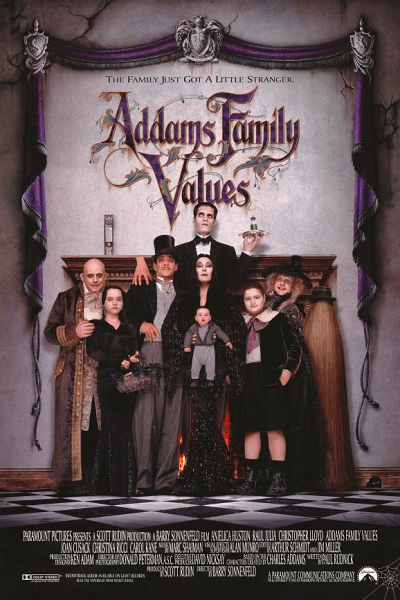
Two years after the release of The Addams Family, Barry Sonnenfeld and Paramount would release a sequel titled Addams Family Values. Despite the passing of two years, the producers of this film and the people putting together the soundtrack were still on the Addams Family meets hip-hop/R&B bandwagon. Therefore, to coincide with the release of Addams Family Values on 19th November 1993, Atlas Records would release a soundtrack featuring H-Town, Portrait, Brian McKnight, Charles & Eddie, R Kelly and the subject of this next song, Tag Team.

On 7th May 1993, the rap duo Tag Team, comprised of Cecil “DC the Brain Supreme” Glenn and Steve “Rolln” Gibson, would release their debut single “Whoomp (There It Is)”. After becoming a popular staple in an Atlanta nightclub called Magic City, Tag Team shopped the song around to various record labels. After much searching, former Stax Records CEO Al Bell would sign the pair to Bellmark Records. Tag Team’s debut record would become a smash hit despite being in competition with the similarly-titled “Whoot There It Is” by 95 South. The song topped the Billboard Hot R&B/Hip-Hop chart and hit the top five on the Hot Rap (#4) and Rhythmic (#5) charts. However, the song’s most impressive achievement came when it peaked at number two on the main Billboard Hot 100 chart on 10th July 1993, held off the top spot by Janet Jackson’s ‘That’s The Way Love Goes’. The song would later return to the #2 spot for a further seven weeks between September and October 1993, with UB40’s ‘Can’t Help Falling In Love’ and Mariah Carey’s ‘Dreamlover’ keeping it off the Hot 100 summit. ‘Whoomp (There It Is)’ would eventually spend a total of 24 weeks in the top 10 of the Billboard Hot 100, a chart record that would stand for four years. All these statistics would see the song go 4x Platinum in the United States, with domestic sales upwards of 4 million copies, and see Billboard rank it as the second-biggest song of 1993, with Whitney Houston’s ‘I Will Always Love You’ beating them to the top spot.

As you can see, when Addams Family Values was set for its theatrical release, Tag Team and their song ‘Whoomp (There It Is)” was one of the biggest songs in the United States. During the song’s lengthy spell near the top of the Hot 100, Ralph Sall, the music supervisor for Addams Family Values, would ask Tag Team to record a song for the film’s accompanying soundtrack. Sall and Tag Team would work together on writing this new, presumably original song. The result of the trio’s efforts would close out the Addams Family Values soundtrack and appear over the movie’s end credits. This new, original song was called “Addams Family (Whoomp!)”.
Upon its release on 19th November 1993, Addams Family Values would replicate its predecessor by topping the US box office in its first week. The film would gross $14.1 million in its opening weekend, knocking The Three Musketeers off the summit. However, Addams Family Values would not have the same pull on audiences that The Addams Family had two years earlier. Despite an increased production budget of $47 million (up from $30 million), Addams Family Values would barely break even at the domestic box office. Despite opening at #1, the movie would finish with a US gross of $48.9 million, a significant drop from the $113.5 million brought in by The Addams Family. However, despite its relative commercial failings, Addams Family Values would out-do The Addams Family in terms of its critical reception. The film would receive positive notices from notable critics like Roger Ebert and Janet Maslin and currently holds scores of 77% on Rotten Tomatoes and 62 on Metacritic (compared to 65% and 57 for the previous film).
Despite the inverse results for both films in terms of critical and commercial reception, there is one thing that both of Barry Sonnenfeld’s Addams Family movies have in common. Both films were the beneficiary of the Golden Raspberry Award for Worst Original Song. You already know that ‘Addams Groove’ was the recipient in the earlier case, but what song completed the double for The Addams Family? Step up Tag Team’s ‘Addams Family (Whoomp!)’, another terrible Addams Family soundtrack song.
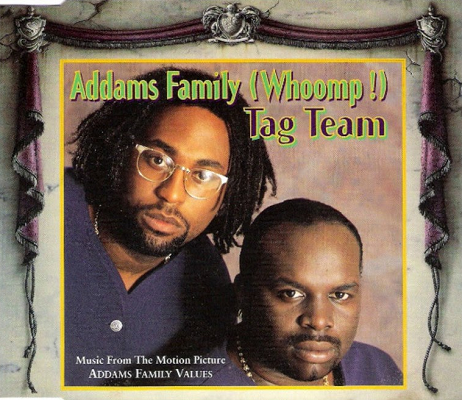
Similar to ‘Addams Groove’, the problems for Tag Team’s ‘Addams Family (Whoomp!)’ begins with its chorus. While I earlier described the laziness of MC Hammer when it came to his choice of lyrics regarding the Addams family, Tag Team somehow manage to have been even lazier when it comes to the chorus of ‘Addams Family (Whoomp!)’. In fact, take a look for yourself. The hook for ‘Addams Family (Whoomp!)’ reads as follows:
Whoomp! Addams Family [There it is]
Whoomp! The Addams Family [Come on, come on]
Whoomp! Addams Family [There it is]
Whoomp! The Addams Family [Yeah, yo, dig it]
Yeah, you read that right. For the chorus of this new original composition written for Addams Family Values, Tag Team have basically taken the chorus of ‘Whoomp (There It Is) and inserted the Addams Family. It is quite a shameless move on Tag Team’s part, as almost if to say, “It’s the Whoomp (There It Is) guys doing a song for the new Addams Family movie, did you expect anything different?” In case you were wondering, this four-line chorus repeats a total of seven times throughout this 3-minute 20-second song.
In a nutshell, the entire song can be summed up as ‘Tag Team try to convince you to watch the new Addams Family for 3 minutes straight’. In fact, Tag Team themselves make references to this fact throughout the song, including the following examples:
‘Tag Team raps another party hit
It’s the Addams Family movie thing.’
‘Let me tell you, it’s the A-D-D-A-M-S
The Addams Family, y’all, yes, yes
They’re creepy, kooky, mysterious, spooky
As loony as can be when you see the movie.’
‘The Addams Family Theme, I’m gonna kick it
Step to the mic like Cube and get with it
Props to the number one family of horror
This song’s for the movie and the dance floor.’
As with the chorus above, these verses are another example of lazy songwriting on the part of Tag Team. Each of the song’s verses lasts around eight lines, but these lines are delivered so fast that they can sometimes pass you by without you even noticing. Similar to ‘Addams Groove’, Tag Team are eager to get each verse over and done with just so they can skip ahead to the same, old, repetitive chorus.
However, ‘Addams Family (Whoomp)’ was not the first time Tag Team reworked ‘Whoomp (There It Is)’ to promote a brand or product. In the same year as ‘Addams Family (Whoomp)’, Walt Disney Records would release Mickey Unrapped, an album that sees Mickey, Donald, Minnie and the rest performing rap and hip-hop songs. Track three on this 12-track album sees Tag Team and the Disney characters Goofy performing ‘Whoomp (There It Went)’. While the chorus to this song is as you expect, the verses involve the Disney characters rapping about ‘movin’, groovin’ and being outta sight’ at Donald’s birthday party. Despite the ridiculousness of Mickey Mouse rapping along with Tag Team, ‘Whoomp (There It Went) would chart at #97 on the Billboard Hot 100 in 1994. For the sake of comparison, ‘Addams Family (Whoomp) would reach #84 on the same chart.
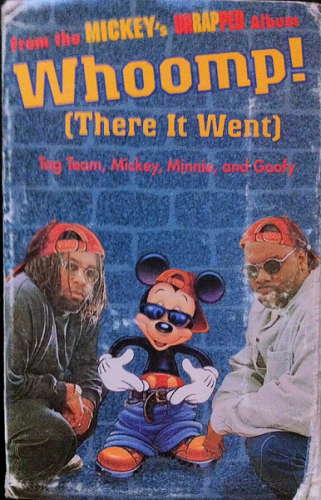
In addition to the problems with the song, the music video for ‘Addams Family (Whoomp)’ pales in comparison to the one filmed for ‘Addams Groove’. The music video for ‘Addams Groove’ featured MC Hammer interacting with all of the film’s cast in several different scenes on the film’s many sets. The video for ‘Addams Family (Whoomp) still uses the Addams Family house and exterior as its main sets, but Christina Ricci (Wednesday) and Jimmy Workman (Pugsley) are the only cast members to appear in person alongside Tag Team. Meanwhile, the likes of Raul Julia (Gomez), Anjelica Huston (Morticia) and Christopher Lloyd (Fester) only appear through clips from Addams Family Values that are shown throughout the video. The rest of the space in this video is taken up by a large group of extras dressed in Hallowe’en costumes made to look spooky enough that these unnamed characters could belong in the Addams Family universe. These extras join Pugsley, Wednesday and Tag Team as they have a party inside and outside the Addams house, complete with multiple choreographed dance sequences. All of these factors make the music video for ‘Addams Family (Whoomp) look a whole lot cheaper than the one recorded for ‘Addams Groove’.
However, despite ‘Addams Family (Whoomp)’ coming across as a lazier, more blatant ‘cash grab’ of MC Hammer’s ‘Addams Groove’, this reviewer would make the case that Tag Team actually made the better Addams Family promotional track. Even though ‘Addams Family (Whoomp) is basically just ‘Whoomp (There It Is)’ but with some new verses added, I would say this song serves as a better advertisement for Addams Family Values than ‘Addams Groove’ does for The Addams Family. Throughout its four-minute runtime, ‘Addams Groove’ tells me very little about the Addams Family or why I should see their upcoming movie, aside from the fact that they are ‘some strange neighbours’ who live next door to MC Hammer. Meanwhile, Tag Team, in 30 seconds fewer, explain who the Addams Family are, why they are particularly unique, why they are essential in the context of this song, and why there is an upcoming movie starring them. The first verse of ‘Addams Family (Whoomp)’ explains the set-up of Addams Family Values to the listeners:
‘Back again, the Addams Family
New baby in the house makes three
Wednesday, Pugsley, Lurch, you ring it
Fester, Grandmama, and Thing’
In the second verse, Tag Team follows MC Hammer in copying the style of the original Addams Family theme song. However, instead of saying that ‘they do what they wanna do…’, Tag Team outright say this:
‘They’re creepy, kooky, mysterious, spooky
As loony as can be when you see the movie.’
Even though they have chosen to directly quote the original theme song, these two lines tell me more about the Addams Family than MC Hammer managed in the entirety of ‘Addams Groove’. Verse three of ‘Addams Family (Whoomp) even describes the basic plot of Addams Family Values. For anyone listening back in 1993, this synopsis serves as a half-decent summation (even if it does include spoilers):
‘Something’s strange, something’s funny
Nanny’s got a plot to get the family money
Makes Fester fall for her
Thing gets wise, spreads the word
The family comes to Fester’s aid
The plot is foiled; no one gets paid
It’s the Addams Family runnin’ things
Get back while tag team swings.’
After this, the song devolves into Tag Team promoting themselves while repeating the same repetitive chorus. However, the less experienced rappers ended up spending three verses explaining who the Addams Family are, why they are unique, what Addams Family Values is about and why you should watch it. It is weird to think that a one-hit-wonder like Tag Team has managed to create a better structured, more coherent, and all-around better promotional single for an Addams Family movie than MC Hammer, who was a marketer’s dream back in 1991.
In a nutshell, the difference between ‘Addams Groove’ and ‘Addams Family Whoomp’ comes down to how MC Hammer and Tag Team went about the task of creating a song that can serve as both a promotional tool for the Addams Family while also serving as a song to listen to outside of their original contexts. Honestly, both pieces fail in the latter category, but only Tag Team’s effort actually works as a song to promote the Addams Family. MC Hammer created an original track that focused more on himself and his existing brand than the other existing brand of the Addams Family. Meanwhile, Tag Team, who did not have Hammer’s fame or popularity or back catalogue, decided to capitalise on their most recent success and apply it to the Addams Family. Slightly change the chorus, write new verses and alter the backing track, changing ‘Whoomp (There It Is) to ‘Addams Family (Whoomp)’.
However, despite lazily reworking their recent hit just to get a bit more money in their pocket, the focus of ‘Addams Family (Whoomp)’ is in the right place. Even though Tag Team put themselves over multiple times throughout the song, the main focus of ‘Addams Family (Whoomp)’ is the Addams Family and their upcoming movie. Having already reworked ‘Whoomp (There It Is) to suit the needs of Mickey Mouse and Donald Duck, Tag Team, not knowing where their next hit would come from, decided to do the same for the Addams Family. Both of these songs are cash grabs, but at least Tag Team are honest about their song’s ‘cash grab’ nature. Unlike ‘Addams Groove’, ‘Addams Family (Whoomp)’ knows what it is (Whoomp There It Is but about the Addams Family) and is not a four-minute ego trip used to promote the singer, including getting the Addams Family to say “Too Legit To Quit”.
Conclusion
All in all, both MC Hammer’s ‘Addams Groove’ and Tag Team’s ‘Addams Family (Whoomp) definitely rank in the lower tier of movie soundtrack songs. I do not know what style of music would best suit a theme for an Addams Family movie, but rap/hip-hop isn’t it. Aside from the flaws listed above, both tunes feel out of place when compared to the source material they promote. Throughout their various guises, the genre of the Addams Family has remained the same: comedy taken from elements of the supernatural, the gothic and the macabre. Based on that description, I am not sure how you can advertise two big-budget movie adaptations of this premise through the use of catchy, mainstream, brightly-coloured, early-90’s rap music. However, that the music department on both The Addams Family and Addams Family Values decided that the soundtracks for both films should be made up of rap, hip-hop, and R&B artists speak to how effective these musical genres were in promoting motion pictures and their soundtracks during the 1990s.
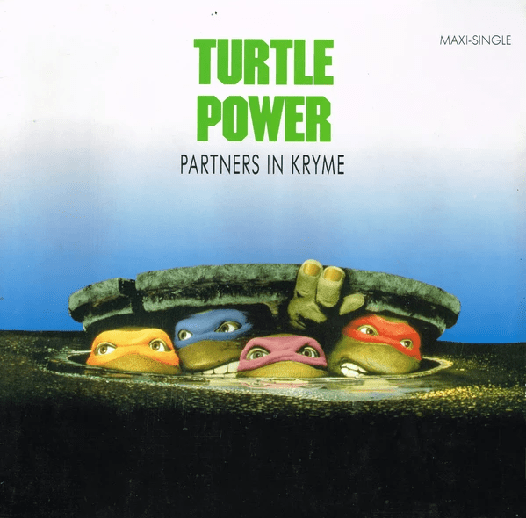
Before ‘Addams Groove’, the music department could look back on the success of Partners in Kryme’s song for Teenage Mutant Ninja Turtles, called ‘Turtle Power!’. Turtle Power spent four weeks at the top of the UK Singles Chart in 1990 (becoming the first hip-hop singles to top the chart) while peaking at #13 on the Billboard Hot 100. The song had also sold well, going Silver in the UK (200,000 copies) and Gold in the USA (500,000). Another song from the TMNT soundtrack, ‘Spin That Wheel’ by hip house group Hi Tek 3, had also done well, reaching peaks of #15 and #69 in the UK and the USA, respectively. Both Partners in Kryme and Hi Tek 3 were unknowns before these hits, showing how successfully the hip-hop genre promoted big-budget motion pictures. Despite the critical response to both songs reviewed in this article, ‘Addams Groove’ and ‘Addams Family (Whoomp)’ would chart on the Billboard Hot 100, at #7 and #84, respectively. In between the two Addams Family pictures, Vanilla Ice would lend his voice to the soundtrack of Teenage Mutant Ninja Turtles II. After both MC Hammer and Vanilla Ice had proven that they could successfully use their music to promote upcoming movies, other mainstream rap and hip-hop acts would show that they were willing to do the same. This would lead to the success of songs like R Kelly’s ‘I Believe I Can Fly’ (Space Jam soundtrack) (3.13 million copies), Will Smith’s ‘Men In Black’ (2.79 million) and Puff Daddy’s ‘Come With Me’ (Godzilla soundtrack) (2.08 million) later in the decade.
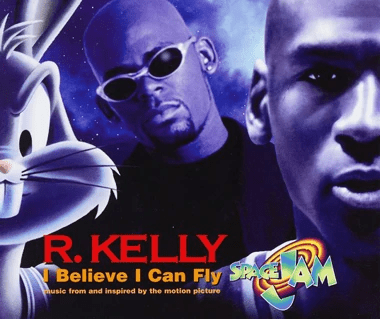
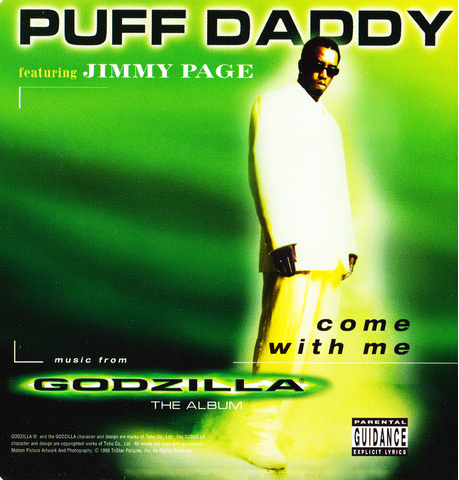
Even if the songs were terrible, both MC Hammer’s ‘Addams Groove’ and Tag Team’s ‘Addams Family (Whoomp)’ successfully drew attention to both the artist and the films they were promoting. These songs also successfully continued and accentuated the trend of major Hollywood studios utilising rap and hip-hop to sell their big-budget family movies to mass market audiences. Even if these songs aren’t that well-remembered today, both ‘Addams Groove’ and ‘Addams Family (Whoomp) play a small but significant role in the history of movie soundtracks and 1990s Hollywood cinema.
 forgotten-media.com