

A small step for mobile gaming, a giant leap for Nokia…
If you look at the list of the best-selling mobile phones, you will find that the top spot does not belong to one of Apple’s many iPhone models but instead the Nokia 1100. The 1100 currently sits atop the charts, having sold 250 million units since its release in 2003. In fact, Nokia not only has the best-selling mobile phone in history but the 2nd and 4th best-selling models too, with 2001’s 1110 and 2013’s 105 selling 247.5 million and 200 million units, respectively. While Apple has been the dominant force in phone technology and sales since the original iPhone launched in 2007, and the iPhone subsequently became one of the most successful technology brands ever, Steve Jobs’s company had to follow in the footsteps of Nokia.
Best-selling mobile phones
| Rank | Phone | Year of release | Unit sales (millions) |
|---|---|---|---|
| 1st | Nokia 1100 | 2003 | 250 |
| 2nd | Nokia 1110 | 2005 | 247.5 |
| 3rd | iPhone 6/6 Plus | 2014 | 222.4 |
| 4th | Nokia 105 | 2013 | 200 |
| 5th | iPhone 6S/6S Plus | 2015 | 174.1 |
| 6th | iPhone 5S | 2013 | 164.5 |
| 7th | Nokia 3210 | 1999 | 161 |
As mobile phones began to move beyond the black plastic flip phone with a pullout antenna, Nokia was at the forefront of this development. The double-punch release of the 3210 in 1999 and the 3310 in 2000 immediately moved the Finnish technology company ahead of its competitors, Sony and Motorola, to become the mobile phone brand. The 3210 and 3310 would become the first mobile models to sell more than 100 million units, with 161 million and 125 million sold each. Aimed at the mass market, specifically at the teen market, the 3210 allowed users to send picture (MMS) messages, create and send customisable ringtones and create full words in text messages using a single keypress through an improved predictive text system. The 3310 would add additional features like a stopwatch, a calculator, a reminder function and a Chat function, allowing 3310 users to send instant back-and-forth text messages to their friends, with these messages being logged with a message history for each individual contact on the device. A single text message could also include up to 459 characters, three times the average length while the user could also hold continuing conversations with multiple contacts simultaneously. While this function doesn’t seem special today, it was revolutionary in 2000.
One of the best and most remembered features of the Nokia 3210 and 3310 were the video games built into the devices. The 3210 would include three games with Memory (a pairs-matching memory game), Rotation (where a group of numbers would have to be rotated into the correct numerical order) and Snake. It is fair to say that Snake is the most iconic mobile game ever created. Originating in 1976, the game involves the player controlling a snake, trying to avoid hitting a wall or its own body, which would end the game. However, as the snake eats, the snake’s body grows longer, increasing the game’s difficulty until the player eventually loses. Nokia was the first to introduce Snake onto a mobile phone, beginning in 1996 and continuing up until the 3210. The 3310 would even introduce Snake II, along with three new video games in Pairs II, Bantumi and Space Impact, an auto-scrolling shoot ’em-up where the player moves a spaceship up and down the screen, firing at oncoming enemy spaceships, collecting powerups and extra lives as they go. Once the player runs out of lives, the game is over.
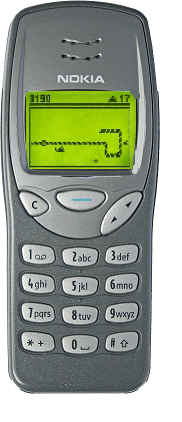
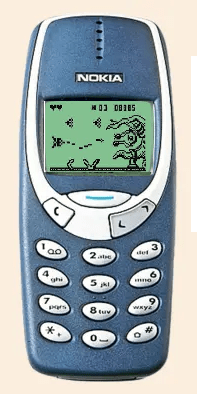
Having popularised video games on mobile phones back in 1997 with Snake, Nokia would attempt to take the subgenre to its next giant leap several years later. In 2003, Nokia would release a mobile phone/handheld games console hybrid to the world. It was known as the N-Gage, a name dripping with forced mid-2000s edginess. Seeing that young people often carried both a mobile phone and a handheld games console (most likely a Game Boy) around with them, the Finnish technology company came up with an ambitious idea. Why not combine the features of a mobile phone and a top-end handheld video game console into one electronic device? A gaming ‘smartphone’. Smartphones (phones that included built-in cameras, email services etc.) were still a new concept in the early 2000s, so one that was also a games console was an ambitious and radical idea. Nokia even wanted consumers to have the ability to play games up to 32 bits in quality and visible in full 3D on this device, a concept unheard of at the time.
However, the Nokia N-Gage is barely discussed today for such an ambitious device. The device does not have the iconic status of the 3310. It doesn’t have any games with the name recognition of those released by Nintendo, Sega or Sony. It is not the first handheld games console you would ever think about. It is not a Nokia phone you would immediately think about. The Nokia N-Gage is, by all its nature, a flop for Nokia when it dominated the world of mobile telecommunications. What happened? How did something that promised to take handheld gaming and mobile gaming into a new era become another failed video games console often brought up in internet listicles titled ‘the worst’? This is the story of the Nokia N-Gage, Nokia’s first and only video games console.
Pre-launch
The Nokia N-Gage was first announced on 4th November 2002. The device was initially revealed among a series of new phone handsets at Nokia’s annual mobile conference. Originally developed under the codename ‘Starship’, this press conference announced that the N-Gage would run on the Symbian operating system as part of Nokia’s S60 range and would include a cartridge slot that would allow the user to insert memory cards into the phone. The main portion of these memory cards would feature video games. Upon announcing the N-Gage, Nokia would reveal that SEGA had been a primary collaborator on the project to produce video games for the system.
In a press release following the conference, the first concept images of the N-Gage were shown online with a release date of Spring 2003.

The finished Nokia N-Gage was unveiled at E3 on May 25th 2003. Nokia put a lot of effort into impressing visiting journalists and fans at their press conference. Airing after the Big Three of Microsoft, Nintendo and Sony had already shown their wares, including the announcement of the Playstation Portable, Nokia transported attendees to and from the main E3 building to the N-Gage press conference at Los Angeles’ Park Plaza Hotel in branded double-decker buses. On these buses, people were given their first hands-on play with the N-Gage, while Demo consoles were also open for use at the hotel.
According to The Next Level, the press conference unveiling the Nokia N-Gage would not go down well with those in attendance. Along with a promotional video showing off the new hybrid console and explaining its key selling points, the presentation would begin with performers breakdancing while playing their N-Gages, complete with a cringeworthy rap about the console’s greatness. A video would show off the device’s launch games which, as you will find out later, were not exactly mind-blowing, original or new. John Romero would come on as a guest speaker to announce an N-Gage port of Red Faction, the THQ FPS set on Mars, which had been a critical and commercial success when it was released on the PlayStation 2 in 2001. However, the reaction to a handheld version of the game, accompanied by a gameplay video, was muted. Then, the price of the Nokia N-Gage was announced, being shown on screen and in true early 2000s fashion on the belly of a young woman wearing jeans and a bra. The price would also receive no reaction. Considering that the presentation also featured several visual and audio problems, this unveiling was not the home run that Nokia may have hoped for, considering that they had to follow up the three big hitters of console gaming.
One month after the E3 presentation, those behind the N-Gage would fire a few shots at the console they perceived as their biggest upcoming threat, Nintendo’s Game Boy Advance. The Game Boy Advance launched in the spring of 2001 and was a huge success, breaking sales records in its opening weeks and months on the market. By the end of 2003, the GBA had sold 42 million units, boosted by the release of the SP, a special re-designed version of the console.
However, on 12th June 2003, Nokia’s media and entertainment head Ilkka Raiskinen told Dow Jones Business News that “GameBoy is for 10-year-olds… if you’re 20 or 25 years old, it’s probably not a good idea to draw a GameBoy out of your pocket on a Friday night in a public place.” He would also say that the N-Gage was looking to target “a different and potentially larger market” than the Game Boy, implying that Nokia’s first games console was looking to appeal more to adults than kids. Strong words to say about the brand that was responsible for the popularity of handheld gaming, with the current model being the undisputed leader on the handheld market.
The N-Gage’s final pre-launch efforts would be reported on by CNN Money’s Chris Morris, who would write in an article on the eve of the device’s release: “Nokia is doing most of its advertising in gaming publications. It’s curious to note that with less than 24 hours remaining before its launch, the N-Gage hasn’t launched any sort of national television campaign. It’s safe to say that a large percentage of the target market probably doesn’t know the N-gage will be available tomorrow.”(Chris Morris, N-Gage is unlikely to love Nokia’s problems, CNN Money, https://money.cnn.com/2003/10/06/commentary/game_over/column_gaming/index.htm)
However, Nokia would hold a massive pre-launch party on 6thOctober 2003 in an EB Games shop in Los Angeles. According to an IGN article covering the event, the party saw competitions involving the N-Gage’s Bluetooth multiplayer capabilities and Tony Hawk’s Pro Skater, where the person who got the highest score won free tickets to the Sugar Bowl the following January. Nokia was also a generous host on this night, giving out five free launch games to the first 100 people who bought the device and 20 free N-Gages to the raffle winners. This party would segue into the midnight release of the Nokia N-Gage on 7th October 2003, ending with the EB store’s supply of N-Gages being completely sold out.
The launch
The Nokia N-Gage would launch on 7th October 2003. To coincide with the launch, Nokia’s website would feature this press release:
“When the clock strikes midnight tonight, gamers around the world will experience the biggest innovation in gaming since the joystick – mobility. Sales of the Nokia N-Gage game deck will start across several continents in over 60 countries, offering gamers both blockbuster game titles as well as true game classics. October 7 marks the first global mobile connected game platform launch in the history of the games industry.”
At the bottom of this press release, under the section ‘About N-Gage’, Nokia’s PR team would describe their new creation as “an innovative mobile device that is creating an entirely new market for the games industry. Built for active and hardcore gamers, the Nokia N-Gage is the first mobile and connected game deck to feature online high-quality 3D multiplayer gameplay over Bluetooth wireless technology and GPRS. The Nokia N-Gage also offers unique online games services as well as a comprehensive and growing games catalogue from the leading game publishers.” (Nokia, Let the sales begin! Nokia N-GageTM game deck sales to start, October 06, 2003. http://www.nokia.com/A4136002?newsid=919619)
The Nokia N-Gage would launch on 7th October 2003, at a price of $299 (equivalent to $488 at the time of writing). Those buying this handheld games console/mobile phone in its first week of release could also purchase up to eight launch games, depending on where they were in the world. Each game would cost between $30-40, prices that Eurogamer’s Kristan Reed would write was “not a price that equates to mainstream acceptance.” Every N-Gage model came with the built-in mobile title Space Impact Evolution X. Like the many other entries in the Space Impact series, Space Impact Evolution X is a shoot-’em-up which sees the player control a spaceship moving vertically and shooting down hordes of enemy crafts. You use the arrow keys on the D-Pad to move in all directions and press the 5 number key to fire your guns, with the 7 button firing your special weaponry.

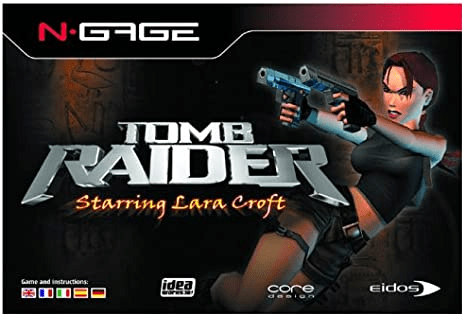
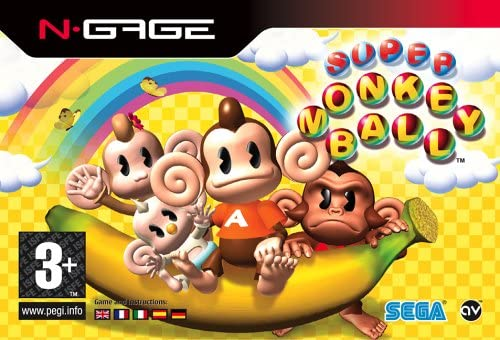
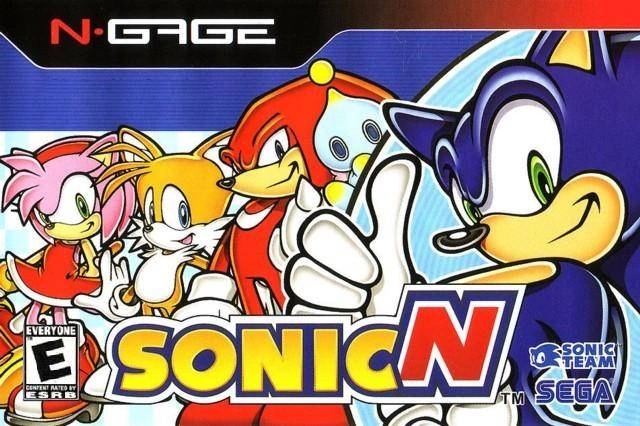
Along with Space Impact Evolution X, the launch titles for the N-Gage included entries from several established video game franchises, including Tomb Raider, Sonic the Hedgehog, Puzzle Bobble and Tony Hawk’s Pro Skater. However, these titles were not new and exclusive titles in these series made exclusively for the N-Gage. They were instead ports of the most popular titles in these franchises that were old enough to be adapted to work with the N-Gage’s specifications. Tomb Raider and Tony Hawk’s Pro Skater were handheld ports of the original games from 1996 and 1999. However, to ensure that these PS1 games worked with the N-Gage, British developer IdeaWorks3D was called in to make the transition from home console to immobile phone console a smooth one. The company would also perform the same duties for Pandemonium, a 1996 3D platformer originally produced by Eidos Interactive. While these ports were altered somewhat, SonicN was a more straightforward port of 2002’s Sonic Advance. Speaking of Sega franchises, Sonic would be joined on the Nokia N-Gage by the puzzle game Puyo Pop and the 3D rolling simian platformer Super Monkey Ball, both previously released for the Game Boy Advance.
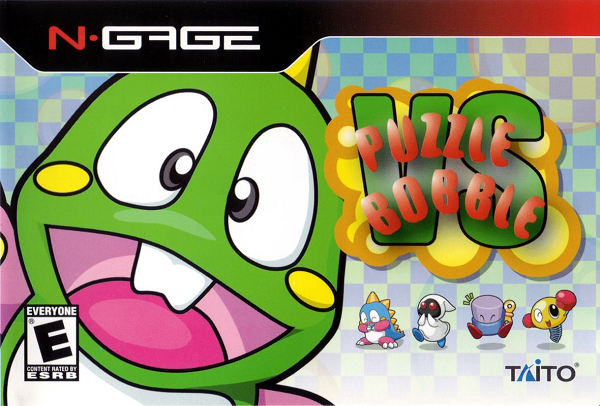
One port significantly altered to show off the strengths of the N-Gage was Puzzle Bobble VS, a port of the 1994 entry in the Bubble Bobble franchise. While Puzzle Bobble Vs retained much of what was in the original tile-matching game, this N-Gage exclusive in the series focused on multiplayer, a big selling point for the console. While the game included a single-player story mode with six levels where our cute hero Bubblen would have to recapture stolen diamonds from the evil Drunk, the mobile phone capabilities of the N-Gage would allow for up to four users to play Puzzle Bobble together using a Bluetooth connection.
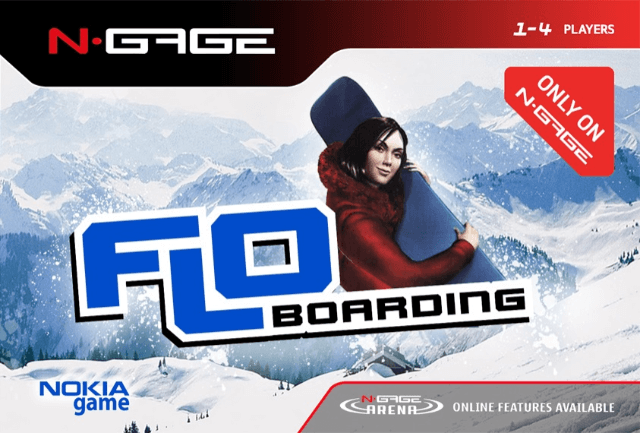
The US and European versions of the Nokia N-Gage would have these seven launch games available. However, the PAL region would get an extra game in Flo-Boarding, a version of the 1999 snowboarding game Supreme Snowboarding (or Boarder Zone if you want to get North American about this). Among the launch titles, Flo-Boarding was the first game to be included in a bundle with the N-Gage if you bought it in Europe. Flo-Boarding retained the main game modes of its PC/Game Boy Color predecessor, including Quick Race, Time Attack, Champion Challenge and the Flo-Boarding Cup. However, the main change would come in the presentation of its gameplay. While the gameplay in Supreme Snowboarding was in full 3D with the camera positioned behind the player as they raced, the races in Flo-Boarding would have an overhead camera and were coded in 2D, with the camera tracking the player’s movements as they moved around the course. This style was standard for racing games in the early 1990s, but by 2003, it was pretty uncommon, even among handheld racing titles. However, Flo-Boarding would also include an exclusive mode in the form of Bluetooth Duel, where two N-Gage users could go head-to-head in multiplayer races.


Early Reaction
Despite placing itself as the next step in handheld gaming, the Nokia N-Gage phone/games console hybrid would not get off to a hot start. Early commercial sales for N-Gage disappointed Nokia, who had been knocking it out of the park in recent years with the 3210 and the 3310. Even the 1100 and 6600, the more straightforward mobile phone models that had also been released in 2003, would completely outstrip its more unique sibling in terms of units sold. However, while the N-Gage was disappointing as a mobile phone, it failed even harder as a games console, the main selling point of this ‘smartphone’. According to a report from financial research firm Arcadia, less than 5,000 Nokia N-Gages were sold in the USA in its first week in October 2003, including figures from mobile phone and video game retailers. In the UK, this number dropped to an abysmal 500 units sold in 6,000 video game shops. By comparison, the Game Boy Advance sold a reported 540,000 models in the USA and 81,000 units in the UK in its first week of release in 2001. These numbers made the GBA the fast-selling games console in history on both sides of the Atlantic Ocean. By comparison, the Game Boy Advance had been sold for $100 stateside and £100 in the UK from launch, a much more affordable option than the $300, £230 or 290 euros consumers were asked to pay for the more untested N-Gage.
Sales of the Nokia N-Gage were terrible enough that the price discounts could not come quickly enough. Within three weeks of the console’s US release, 1UP reported that Gamestop had already cut the price of the N-Gage by $100 to $199 on its online store, such was the lack of demand for this hybrid. Nokia even struck a deal to give away 70,000 copies of Tomb Raider’s N-Gage version at the Sugar Bowl college football game on 4th January 2004, having sold a reported 3,000 copies of the games since October.
For those who actually bought a Nokia N-Gage, their reception of the device was not great either. The problem with trying to make a video games console with mobile phone capabilities or a mobile phone on which you can play high-quality video games is that you end up sacrificing elements of two full products to create a combined effort that isn’t as good as either. Those who wanted a mobile phone didn’t like that the N-Gage’s earpiece and receiver were on the top of the device. Therefore, after dialling a number or choosing to answer a call by pressing the correct buttons on the front of the N-Gage, the user would have to turn the phone sideways to speak into it. People compared this act to talking into a taco, leading to the N-Gage being derisively nicknamed the ‘Taco Phone’. When the user wanted to play a video game on their N-Gage or change the video game they were already playing, they would have to switch off the N-Gage, remove the back panel and take out the phone’s battery before popping in the game, replacing the phone battery and rebooting the N-Gage. Every time someone wanted to use their Nokia N-Gage as a video game system, the main selling point of this phone/console hybrid, they would have to undertake this ritual. A reviewer for CNN Money reported this entire process taking 90 seconds. I wouldn’t be surprised if, after a certain period of owning the N-Gage, users had either stopped changing the game they were playing to avoid removing the battery or, having performed this whole palaver so many times, people had ended up developing Stockholm syndrome over the idea and began up extolling this practice as a benefit of owning a Nokia N-Gage.
Other aspects of the N-Gage’s design were received negatively. The device’s 2.1-inch screen was disorientating for game players, being somehow taller than it was wide. The screen, measuring 35mm wide and 41mm tall, produced an aspect ratio of 11:13 during a time when the average television screen had a 4:3 aspect ratio. Also, doubling up the phone number keys as command buttons for a video game was an adjustment for those used to the setup of a Game Boy. Nokia had designed these phone buttons so that they could not be easily pressed down by the user and stop people from making phantom phone calls. However, with buttons designed to be this stiff also being used to control video games, critics found that such a decision led to clunky controls in numerous games. However, some testers would praise the N-Gage’s control scheme, arguing that the number of buttons available on the device could lead to more in-depth controls compared to the A and B found on a Game Boy Advance.
In fact, the highest praise for the N-Gage came from the more mobile phone elements available on the device, such as the FM radio, MP3 player and email service, features that Nokia users would have been more familiar with. In his E3 report on the N-Gage, Kristan Reed would talk about the “excellent functionality” of these features, writing, “It’s easy to see why Nokia has decided to stick its neck out and launch this ambitious product.” The concept of using Bluetooth for multiplayer and online gaming was also praised, as many critics wondered how far this level of multiplayer could extend, with some N-Gage games promising up to four or six players connecting and playing together at the same time. Also, the fact that 32-bit games like Tomb Raider, Pandemonium and Tony Hawk’s Pro Skater were playable on such a device in 2003 marked a huge step forward for mobile gaming.
However, the overall less-than-positive reception to the N-Gage was also reflected in the critical reaction to console’s launch games. Using the old video game aggregator site GameRankings, the six main launch titles for the Nokia N-Gage received an average score of 56.9% from video game critics, with each game receiving around 15 major reviews. Not a particularly stellar collection of games according to that score. By comparison, the device’s main rival, the Game Boy Advance, had released along with 17 launch titles in North America and 15 in Europe in 2001, with these games receiving mean scores of 74.2% and 72.9%, respectively.
Unsurprisingly, the N-Gage port of Tony Hawk’s Pro Skater received the highest score, a 76% average. While critics pointed out problems with the N-Gage’s control scheme and even positive reviews pointed out that a purchase of the game was unnecessary considering the availability of the game on consoles and the Game Boy Advance, Tony Hawk’s Pro Skater was seen as the best reason for consumers to purchase the Nokia N-Gage, especially considering the lacklustre quality of the other games available for the gaming phone. On the other end of the review spectrum, Puzzle Bobble VS, something closer to an N-Gage exclusive title in an established series, was savaged by reviewers, receiving a 30% score. The game was viewed as dull for a tile-matching puzzle game featuring eye-catching characters and bright colours. Poor visuals, unbelievably slow gameplay, unexciting multiplayer and other technical issues made critics mark Puzzle Bobble VS out as a game to avoid, with many even wondering how someone could screw up a concept as beloved as Puzzle Bobble.

Aside from these two outliers, the rest of the Nokia N-Gage’s launch games were all viewed as mediocre, receiving critical scores between 55% and 63%. When an already existing game is later ported to a new console, consumers and critics are looking for what makes this new version of the old game unique, looking for why people should specifically buy the more recent version of the game on the new console rather than investing their time in the original game. The problem with the majority of the Nokia N-Gage’s launch titles being ports of already existing games was that most critics could not find a reason to recommend that potential consumers buy SonicN or Super Monkey Ball over the version that had already been released on the Game Boy Advance and were available for less money. The inconsistent inclusion of multiplayer was also criticised, with the addition receiving praise in Tomb Raider and Pandemonium for adding an intriguing new element to these older games. However, the decision to only include single-player modes for Sonic The Hedgehog and Puyo Pop on a console that had multiplayer capabilities left reviewers rueing. Also, many games were found wanting in the sound department, with the reworked ports of Pandemonium and Tomb Raider seemingly being without audio. These may have been an unfortunate effect of trying to get a PS1 game to work on a mobile phone, with one critic of Pandemonium complaining that the stripped-out music “leaves each stage devoid of any real personality”.
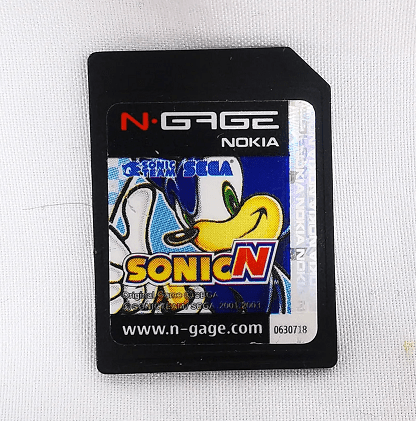
The other consistent criticisms found across the N-Gage’s launch titles were down to the N-Gage itself. With each title coming on external memory cards the size of a postage stamp, many games experienced a notable drop in frame rate. As the phone tried to process these compressed games, said compression had slowed down the speed of the original gameplay, taking the fun out of an ordinarily enjoyable game like Puzzle Bobble. The N-Gage-specific control schemes were also something of a distraction. When added to early PS1 games like Tomb Raider, the crummy controls only served to show how fastly these games had aged in a matter of a few years. Finally, and most prominent among the complaints came down to the N-Gage’s screen quality. The 2.1″ display (35x41mm), adapted from Nokia’s 5510 mobile phones, produced a resolution of 176×208. These specifications are acceptable for a regular mobile phone in 2003 when you read text messages and look at apps with relatively simple colour palettes. However, when presenting these older games at a 32-bit rate, sometimes in full 3D, such a screen resolution often produced a lack of depth and muddy graphics. Somehow this visual quality problem was exacerbated when it came to the games that were conversions of 16-bit tiles like SonicN, Puyo Pop and Super Monkey Ball. 16-bit games often feature brighter colour palettes than their 32-bit counterparts, primarily when representing the backgrounds of levels and the sprites used for the characters. However, the Nokia N-Gage was made to support games up to 32-bits and account for games in 3D. Therefore, when playing SonicN, Puyo Pop and Super Monkey Ball, some critics found that these games looked better on the less powerful and cheaper Game Boy Advance.
Some gaming news sites would also report that the number of launch games available to N-Gage buyers in the United States varied from state to state. IGN would say, “Where gamers were initially promised a launch list of ten games, they were instead faced with around five games, ” with a game like Super Monkey Ball only being available in major locations like Los Angeles. The site would speculate that these issues may have been an issue relating to the size of Nokia’s marketing campaign for their inaugural console, but “gamers will undoubtedly be upset by receiving half the amount of games at launch than initially promised.”
The Redesign: The Nokia N-Gage QD
Six months into the life of the Nokia N-Gage, the hybrid mobile phone/games console was already being written off as a failure due to low early sales and a less-than-positive critical reaction. Nokia would respond to the criticisms of the N-Gage by announcing a new, redesigned version of the device, the Nokia N-Gage QD. The N-Gage QD was slightly smaller than the original model but contained the same screen and a larger battery. This larger battery increased the phone’s stand-by hours from 200 to 240hrs, doubling the continuous gameplay that owners could enjoy from 2 to 4 hours. However, the main selling point of the N-Gage QD was its design. The QD had a rounder feel, and the device’s buttons were arranged as part of a wheel. The phone earpiece had been moved onto the front of the device, and the original, flatter five-way D-Pad was replaced with a more user-friendly circle with a separate ‘OK’ button now next to it. The problematic number keys were redesigned with buttons that now jutted out more but were easier to depress, making them more suited for hybrid phone and gaming usage. However, the most significant change came with the movement of the cartridge slot. After many complaints over the original system, Nokia moved the slot to the bottom of the phone, meaning you could change your games without removing the phone battery, saving minutes of countless battery removals and phone restarts.
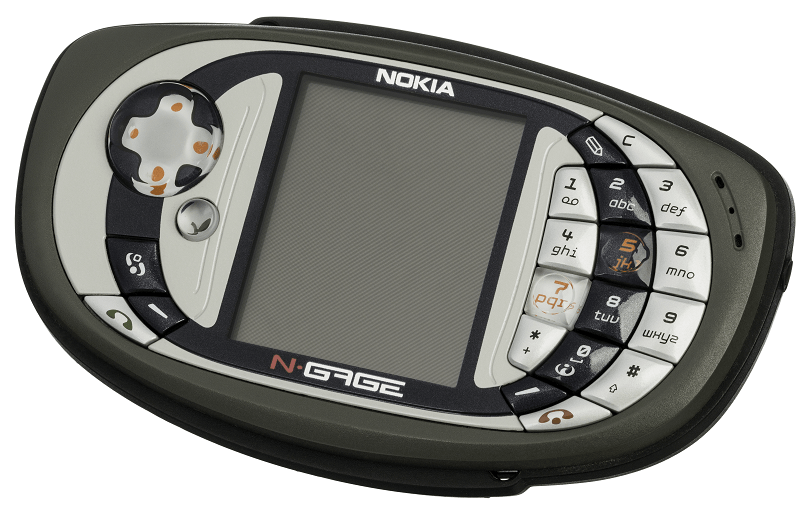
However, to appeal the N-Gage QD to gamers who had not bought its predecessor, Nokia would remove some of the mobile phone features from the original device, including the FM radio, MP3 player and USB port. A weird move considering that these were some of the best-received features from the original N-Gage.
The Nokia N-Gage QD would launch worldwide in May 2004. Nokia announced that despite the changes made from the first N-Gage, the QD would support existing N-Gage titles in addition to new exclusives like Marcel Desailly Pro Soccer, Ashen and Pathway to Glory in addition to already popular titles like Tiger Woods PGA Tour 2004, The Sims Bustin’ Out and Crash Nitro Kart.
The End
In 2006, the Nokia N-Gage’s miserable existence would come to an end. In November 2005, Nokia’s head of corporate strategy announced that no more versions of the N-Gage would be produced with the device’s gaming technology being adapted into other Nokia phones in 2007. Then in February 2006, the Finnish console meant to challenge the might of Nintendo’s Game Boy Advance would be pulled from store shelves in Western markets, including the UK and USA. After being resoundingly beaten by the GBA, despite being released 2 years later, the N-Gage now had new handheld challengers in Nintendo’s latest console, the DS, and the Playstation Portable (PSP), Sony’s first foray into the handheld market. Against these newer ones, it was no contest. By the end of its first month of release, in December 2004, the Nintendo DS had already sold 2.84 million units in Japan and the Americas alone. After being spread to the rest of the world in 2005, the console sold 14.43 million units in its first year. The PSP had also proven a successful step for Sony. Released in Japan at a similar time to the DS in late 2004, the PSP had sold over 50 million units worldwide when the last Nokia N-Gage game, Payload, was released on 31st May 2006. (By this date, the Nintendo DS had sold more than 21 million units.)

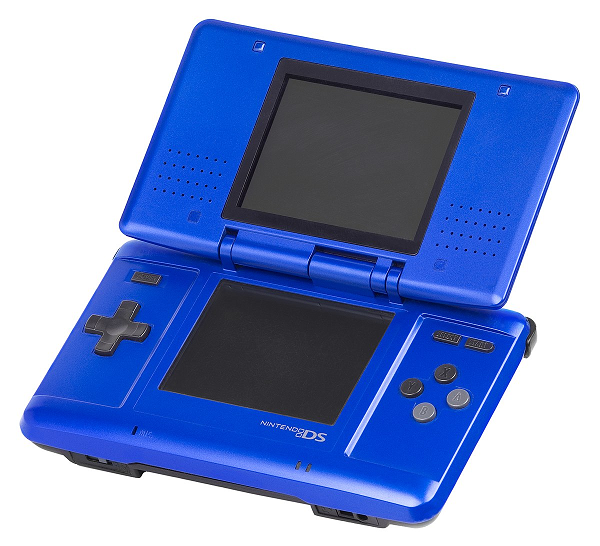
Even though neither the Nintendo DS nor the PSP had the resolution to stream 32-bit games, these consoles were cheaper, had a longer battery life allowing for more continuous play and most importantly, didn’t have to compensate for the features of a mobile phone. Nintendo and Sony also had proven success in the video game market. In-built familiarity from gamers meant they were likelier to buy consoles from these companies than the unproven Nokia, whose background was in mobile phones.
The Nokia N-Gage would end with a reported 3 million units sold worldwide over its three-year existence. Note that Nokia originally planned to have sold 6 million units in its first 12 months alone. The N-Gage’s numbers make the device the 10th-best-selling handheld video game console ever released, more than the Atari Lynx (1 million) but fewer than the Japan-exclusive Wonderswan (3.5 million). However, these numbers mean that the Nokia N-Gage doesn’t even rank within the top 100 most-bought mobile phones, currently sitting 110th for sales at the time of writing. For Nokia mobile phones specifically, the N-Gage ranks 25th. The device was by far the worst-selling of the five phone models that Nokia released in 2003, paling compared to the 20 million sold by the next worst-selling 2100 and a pinprick compared to the 250 million units sold by the 1100, the second best-selling mobile phone ever made.
The Nokia N-Gage would become the latest ‘Game Boy killer’ that would end up being outshone by Nintendo’s flagship handhelds, joining fellow fallen comrades in the Atari Lynx, Sega Game Gear, Sega Nomad, Turbografx Express, Neo Geo Pocket, Wonderswan and the Tapwave Zodiac.
Game Library
Now you know about the Nokia N-Gage’s launch titles and the critical reaction to them, it is time to talk about the rest of the games library made available for the ‘smartphone’. In December 2003, Pasi Pölönen, Nokia’s games publishing director, announced that the Nokia N-Gage would have up to 100 titles available to buy by the end of 2004. 63 games were released for the N-Gage during its lifetime. After its launch line-up didn’t offer anything that gamers had already had the opportunity to play on other consoles for a considerable amount of time, the N-Gage would eventually receive the same games as other handheld consoles and regular consoles. Finally, the device was getting its own versions of significant titles like Crash Nitro Kart, FIFA 2004 and Spider-Man 2, and in good time, thanks to development on these N-Gage versions being handled by the same studios operating the Game Boy Advance versions. Sometimes, he N-Gage sometimes beat out its competition to gain handheld exclusives of games like X-Men Legends, NCAA Football 2004, Colin McRae Rally 2005 and Xanadu Next.


Along with getting the newest releases, the Nokia N-Gage would continue the path it had first trod by including Tomb Raider and Tony Hawk’s Pro Skater among its launch titles by offering handheld versions of classic video games. N-Gage’s users could buy pocket versions of Sid Meier’s Civilisation, Bomberman, Sega Rally Championship, Virtua Tennis and the first handheld copy of Settlers of Catan.
However, the main reason to own a Nokia N-Gage was for the console’s exclusive titles. During its lifetime, the hybrid console got exclusive entries in several major video game series resulting in The Elder Scrolls Travels: Shadowkey, WWE Aftershock, MLB Slam, MotoGP, The King of Fighters Extreme and Warhammer 40,000: Glory in Death. None of these titles would really set the world on fire.
However, aside from those significant licenses, the N-Gage would have plenty of great original titles to choose from. While the Nokia N-Gage always lacked that ‘Killer App’ that would encourage consumers to buy the console, in the same way that Tetris had done for the Game Boy or Sonic The Hedgehog for the Sega Mega Drive, it did have plenty of well-received original titles. Games like High Seize, a turn-based strategy game set in the Golden Age of Piracy, or Rifts: Promise of Power an RPG based on the popular tabletop game. The N-Gage also particularly excelled in its racing games.
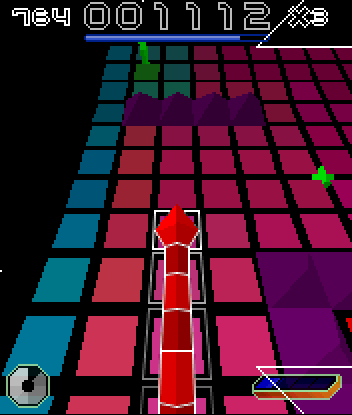
The N-Gage also stuck to its Nokia roots with a new version of Snake. This update takes the classic game into the third dimension as player control their snake on colourful square or hexagonal grids through 63 levels, trying to increase the snake’s length and achieve the highest score. In addition to grabbing pick-ups like shields or extra life, players could increase their playtime by following certain paths or collecting letters to spell out N-GAGE or SNAKES to gain an extra life. Other features included green and red cells to increase or slow the snake’s speed, some ‘breakable’ walls that would decrease the snake’s health and Seekers that could steal items or energy from the player. Compared to other N-Gage titles, Snake was available as a free download from the device’s official website. If someone’s friend wanted the game for their own N-Gage, the player could send their friend the full game over Bluetooth. With the game also supporting both local and online multiplayer (through the N-Gage Arena), Snake for the Nokia N-Gage was deemed by critics as a worthy update to the classic mobile game, earning scores in the 80% range.
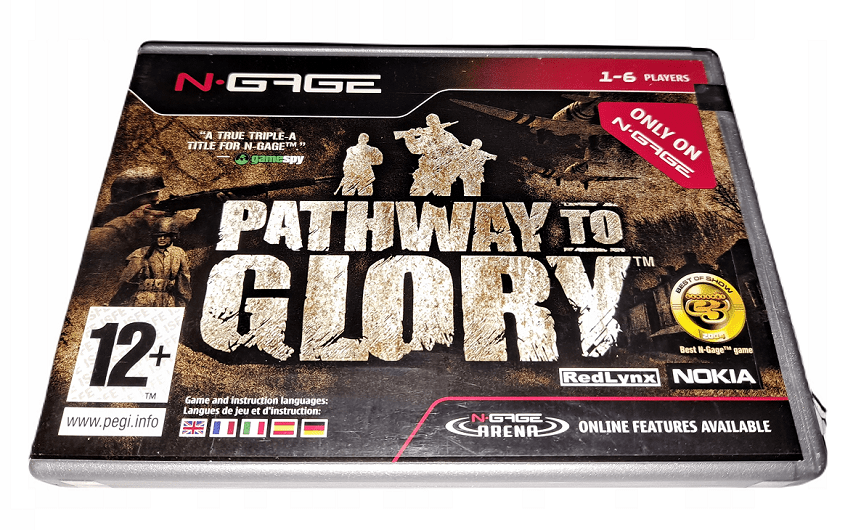
However, the best-received game on the Nokia N-Gage was another turn-based RPG called Pathways to Glory. Pathways to Glory was a squad-based tactical combat title set during WW2. The player leads a platoon of special forces into Southern Europe in 1943. Choosing to play as either the invading Allied forces or the occupying Axis powers, you can decide which countries you want to be represented on the battlefield. You can pick your squad of soldiers based on their skills and stats. You can choose which weapons your soldiers will carry into battle. The player will then lead their team through a series of action-packed missions in single-player fighting through numerous notable locations. Alternatively, you could play with a friend in multiplayer in hot seat, co-op or versus modes, or even play online with other N-Gage users using N-Gage Arena.
Pathways To Glory would receive a score of 83% on Metacritic based on 18 critical reviews. The review would include 8 scores of 90% or above and even a perfect 100 from The Sunday Times. While reviews noted the steep learning curve for new players, and some weighed up the game’s quality compared to Advance Wars on the GBA, critics mainly praised the RedLynx title. The controls were easy to master, the gameplay had depth, the story was intricate and involving, and the game’s presentation was outstanding. Even the soundtrack received praise. For many reviewers, Pathways to Glory wasn’t just the best game on the N-Gage; it was one of the best strategy games on the market for any console in 2004.
Conclusion
What began as an ambitious idea and potentially groundbreaking concept ended up producing a rare commercial flop for the world’s market leader in mobile phones. However, the Nokia N-Gage was not a bad console in theory. The idea of combining a handheld video game console and a mobile phone into one piece of technology was not a bad idea. Just look at the number of video games that you are now available to play on your smartphone thanks to the App Store and Google Play.
In 2003, Nokia was at the top of the mobile phone market and seemed to have the ability to read where the wind was going in terms of phone development. The company was also one of the pioneers of the ‘smartphone’ dating back to the late 1990s, leading you to believe that N-Gage had a good chance of being another best-seller for Nokia. If it had sold well, who knows the effect the N-Gage would have had on both the communications and video game markets. However, it was always going to be difficult for a mobile phone company to establish itself as a significant player in another industry, especially one as crowded as the video game industry. With Nintendo having held an iron-like grip on the handheld console market since the late 1980s, it always was going to be a difficult, but not impossible task, for Nokia to convince consumers to buy their handheld console instead of the Game Boy when so many other companies had failed to do the same.
Ultimately, the N-Gage’s fate was sealed by Nokia’s failure to properly market this ‘revolutionary’ hybrid device. The N-Gage’s disastrous E3 launch immediately gave a bad first impression of the console to video game journalists and industry insiders, and Nokia’s attempt to directly compete with the Game Boy Advance, even badmouthing the market leader in handheld consoles, showed the naivety of these mobile phone developers attempting to plant their flag as major players in the gaming sphere. Also, the lack of a major marketing campaign emerging until one month before release meant that by the time the N-Gage launched, nobody knew or cared about the console’s existence.
Nokia’s naivety towards the N-Gage was also shown in the console’s high launch price of $299, the small number of games available to buy at launch (8), and the fact that the launch line-up didn’t contain anything particularly new or exciting. Sure, the opportunity to play handheld versions of the original Tomb Raider or Tony Hawk’s Pro Skater in the closest possible quality to their original console versions may have provoked some to pick up the N-Gage, but this phone/games console lacked that ‘killer app’ title that immediately set it apart from the competition and had people rushing to buy to their local game retailers. Plus, when those who bought the N-Gage in its early weeks of release actually played the meagre library of launch titles, the results were mediocre.
Another factor that doomed the N-Gage from an early stage was the design of the device itself. By trying to be both a mobile phone and a handheld games console, this hybrid ended up being a combination of two products that ended up being inferior to both. Especially as a video games console, the N-Gage’s design features, including a small screen and the placement of certain buttons, led to an overall less-than-enjoyable playing experience. Plus, the uniqueness of the hybrid led to the underwhelming size of the N-Gage’s game library as many developers had to significantly change their games to suit the N-Gage’s control scheme and the SD cards that the games were stored on. However, most video game developers were not suited to producing games for any mobile phone in the mid-2000s due to the limited storage space available to play games on your average handset at the time.
However, despite the mediocre reception to the N-Gage’s launch games, the overall quality of the games released for the console would improve over the device’s lifespan. According to MobyGames, the 15 games released in the N-Gage’s release year of 2003 received an average critical score of 55.8%. The following year, that average score would jump up to 69.2% for a total of 20 games. Then, in 2005, which saw a whopping 23 games released for the hybrid, Nokia N-Gage games received an average review score of 71.5%, with the console finally finding its niche with racing and turn-based strategy games. Across the four years that new software was produced for the Nokia N-Gage, the average game released received a score of 64.95%. Considering how critics felt about N-Gage’s launch games, this percentage is not a bad score for a console that only received 63 titles in total.
You could criticise Nokia’s decision to cut their losses on the N-Gage only 2 years into the console’s eventual four-year run. However, the hybrid’s poor early sales had truly spooked the company. Plus, due to the fast-moving nature of the gaming world, the N-Gage did not have much time to recover from its poor start. The arrivals of the Nintendo DS and the Playstation Portable in 2004 and 2005, respectively, both coming from the resident titans of the industry, were set to further dwarf Nokia’s market share while offering the same capabilities that had been the N-Gage’s calling card, like the chance to launch multiplayer games both online and locally through the use of Bluetooth. Plus, the launch of the first generation of the iPhone in 2007 was set to take the concept of a ‘smartphone’ into a new age, including the ability to play 2D and 3D video games through virtual downloadable applications. Whichever way you viewed it, it wouldn’t be long before the Nokia N-Gage quickly became a relic of the past after originally promising to take both handheld video gaming and mobile phones into the future. Therefore, Nokia had very little choice except to abandon their dreams of success in video gaming and instead revert to their home comforts of producing strictly mobile phones.
In terms of what it promised and even in some of what it delivered, the Nokia N-Gage was ahead of its time. However, due to a series of factors, this early step forward in mobile gaming is mostly forgotten today. Ultimately, in the end, mobile phone users didn’t want the Nokia N-Gage and fans of handheld video games didn’t want the Nokia N-Gage.
 forgotten-media.com